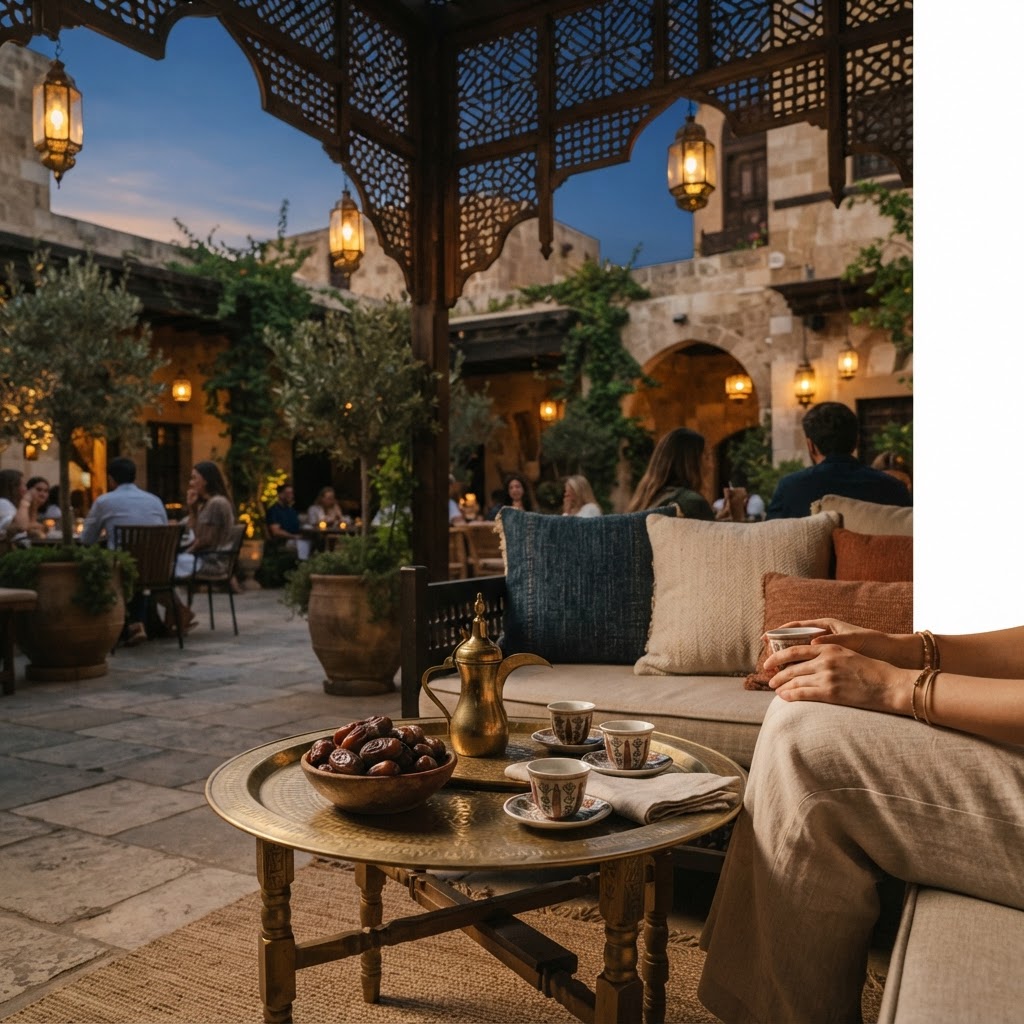
Hospitality Concept Development For Hotels Starts With A Simple Question: Is Your Food And Beverage Program Designed To Make Money, Or Just To Fill Space? This Guide Breaks Down The Revenue Levers, Margin Pressures, And Strategic Decisions That Separate Hotels Whose F&b Contributes Meaningfully To The Bottom Line From Those Where It Quietly Drains It.
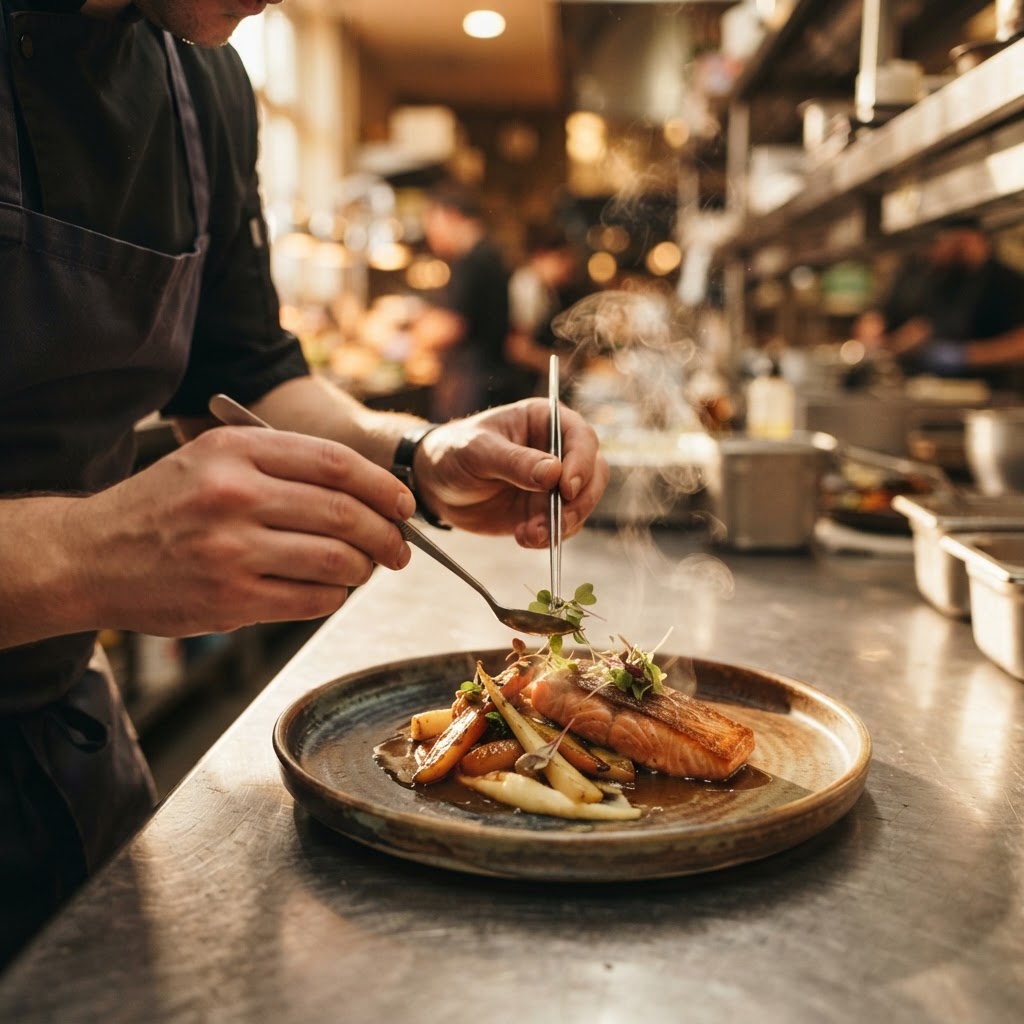
F&B Revenue Optimization for Hotels: Turning the Cost Center into a Profit Engine
Hospitality concept development for hotels starts with a simple question: is your food and beverage program designed to make money, or just to fill space? This guide breaks down the revenue levers, margin pressures, and strategic decisions that separate hotels whose F&B contributes meaningfully to the bottom line from those where it quietly drains it.
The State of Hotel F&B in 2025
Food and beverage represents approximately one-fifth of total hotel revenue across both the UK and US markets, according to the Auden Hospitality F&B Report 2025 (produced in partnership with HotStats). That share has been remarkably stable. What is changing is what happens beneath it.
F&B revenue per occupied room rose 3.8% in the first half of 2025, outpacing overall hotel revenue growth of just 0.8% over the same period, according to CBRE. Beverage venue revenue grew 5.4%, while food venue revenue grew 4.7%. On paper, F&B is outperforming rooms.
But profit margins tell a harder story. UK hotel F&B profit margins dropped to 22.3% in 2025, down from 23.1% the previous year (Auden / HotStats). US margins held steadier at approximately 27%, though CBRE data puts US F&B department margins slightly higher at 29.1% for H1 2025, up from 28.7% in 2024. Both markets remain below pre-2019 benchmarks.
The primary pressure is labor. Across the UK data set, labor costs consume over 45% of total F&B revenue. Ingredient inflation compounds the problem: key breakfast items like bacon, tomatoes, and eggs have risen between 10% and 30% since 2020.
The result is an industry generating more revenue per guest but keeping less of it. That gap is where revenue optimization lives.
Five Levers of F&B Revenue Optimization
1. Menu Architecture: Design for Yield, Not Variety
The most common mistake in hotel F&B is treating the menu as a guest satisfaction tool rather than a revenue instrument. A sprawling menu increases food costs, slows kitchen throughput, dilutes brand identity, and makes every service harder to execute well.
Menu engineering is the practice of analyzing each menu item against two axes: popularity (how often it sells) and profitability (how much margin it contributes). The goal is not to eliminate unpopular items. The goal is to understand why certain items perform and to design the menu so that the most profitable items are also the most ordered.
This means structured menu architecture: a tight number of dishes per category, clear pricing tiers that guide guests toward higher-margin choices, and seasonal rotation that keeps the menu fresh without increasing permanent SKU count. It also means being willing to remove items that are popular but unprofitable, or restructure their pricing and portion size so they contribute meaningfully.
For a deeper framework, see our Menu Concept Development guide and the Menu Engineering and Architecture concept entry.
2. Daypart Strategy: Maximize Every Hour of Operation
Most hotel F&B spaces are designed for peak service and left underutilized for the other 16 hours of the day. A restaurant that serves 120 covers at dinner but sits empty from 10am to 6pm is not a revenue problem. It is a strategy problem.
Daypart strategy means designing distinct offers for breakfast, lunch, afternoon, dinner, and late evening, each with its own menu format, price point, service style, and target audience. The same physical space can serve a grab-and-go breakfast counter in the morning, a business lunch express menu at midday, an afternoon tea or co-working package in the gap hours, and a full a la carte dinner service in the evening.
The financial impact is significant. A space that generates revenue across four dayparts instead of two effectively doubles its contribution per square meter without increasing rent or equipment investment.
Our Daypart Strategy concept entry breaks down the framework in more detail. The Al Jazira Stadium case study demonstrates this principle at scale: a venue designed for match-day F&B that was restructured to operate profitably across 365 days by building distinct daypart programming. See the Al Jazira Stadium case study.
3. Breakfast: The Highest-Volume, Highest-Pressure Meal
Breakfast is the meal every hotel guest encounters and the one most operators get wrong. According to the Auden Hospitality report, breakfast allocations have continued to rise in response to cost inflation, while guest expectations have shifted toward quality, personalization, and sustainability.
The data points to a clear trend: the sprawling, waste-heavy buffet is giving way to smaller, better-curated offers. Guests no longer equate value with volume. They respond to craftsmanship, local flavor, and thoughtful design. Some hotels are now using AI image recognition to monitor plate waste, using that insight to reduce preparation waste and tailor menus in real time.
For operators, the breakfast optimization opportunity has three components:
- Cost control: ingredient inflation (10-30% on key items since 2020) means that unstructured buffet offerings are more expensive than they appear. A curated, semi-a-la-carte model can reduce waste while improving perceived quality.
- Revenue capture: breakfast is often bundled into the room rate, which means its cost is visible but its revenue is hidden. Unbundling breakfast, or creating tiered breakfast packages, makes the meal visible as a revenue stream rather than just a cost center.
- Experience design: a breakfast that feels local, fresh, and intentional becomes a reason guests recommend the hotel. A breakfast that feels generic becomes a reason they book elsewhere next time.
4. Beverage Program: The Higher-Margin Engine
Beverage consistently outperforms food on margin. According to the Auden report, food accounts for roughly 57% of total F&B income, but beverage carries the stronger profit contribution per unit sold. CBRE data shows beverage venue revenue growing faster (5.4%) than food venue revenue (4.7%) in 2025.
Yet many hotel beverage programs are afterthoughts: a standard bar menu, a wine list chosen by the distributor, and a cocktail offering that replicates every other hotel bar in the city.
A optimized beverage program has three layers:
- The signature layer: 3-5 house cocktails or mocktails that are unique to the property, tell a story, and command a premium price. These are the items that get photographed, shared, and remembered.
- The volume layer: a streamlined list of well-known drinks that can be produced quickly and consistently during peak hours. These are the margin workhorses.
- The experience layer: beverage moments that are not just drinks but events. A champagne trolley, a tableside cocktail service, a local spirits tasting flight. These create the kind of experiences that justify higher price points and drive ancillary revenue.
For hotels in markets where alcohol is restricted, the same principle applies to non-alcoholic programs. A sophisticated mocktail and zero-proof beverage strategy can be just as distinctive and margin-positive as a traditional bar program.
5. Operating Model: Self-Operate, Outsource, or Hybrid
The decision of whether to operate F&B internally, outsource to a third-party operator, or build a hybrid model is one of the most consequential revenue levers a hotel can pull. It affects cost structure, brand control, guest experience, and long-term flexibility.
Self-operation gives full control over quality and brand alignment but carries the full burden of labor costs (45%+ of F&B revenue), training, and operational complexity. Outsourcing to a proven operator reduces operational burden and can bring in established brands that drive footfall, but it cedes margin and creative control.
The hybrid model, where the hotel operates certain dayparts or venues internally and outsources others, is increasingly common. A hotel might self-operate breakfast and room service (where quality control is critical to the guest experience) while outsourcing dinner service to a restaurant operator that can build a destination venue.
Our Decision Guide on outsourcing hotel F&B provides a structured framework for this choice. The key is not which model is best in the abstract, but which model fits the property's positioning, market, and operational capacity.
Pricing Strategy: Moving Beyond Cost-Plus
Most hotel F&B pricing is built on a simple cost-plus model: calculate the food cost, multiply by a target ratio, and that is the menu price. This approach is operationally convenient but commercially inadequate. It ignores what guests are actually willing to pay, how price signals quality, and how different dayparts and service formats support different price ceilings.
Revenue-conscious pricing requires three layers:
Anchor pricing: establishing a clear price ceiling on the menu through a small number of premium items that most guests will not order but that anchor the perceived value of everything else. A 45-euro steak makes a 28-euro main feel reasonable. Without the anchor, the 28-euro main feels expensive.
Tier architecture: structuring the menu in clear price tiers (entry, mid, premium) so that guests self-select based on their budget and occasion. The mid-tier should carry the highest margin and the most prominent placement. Most guests default to the middle.
Occasion pricing: recognizing that the same dish can carry a different price in different contexts. A coffee served in the lobby at 3pm is a different product from the same coffee served with breakfast at 7am. Room service pricing is a third context. Each of these occasions has a different perceived value and should be priced accordingly.
The goal is not to charge more. It is to charge what each guest is willing to pay for the experience they are receiving, at the moment they are receiving it. Hotels that price dynamically across dayparts and occasions consistently outperform those that apply a single margin model across the board.
The Labor Challenge: Restructuring for Efficiency
Labor consuming 45% of F&B revenue is not a temporary problem. It is a structural reality that requires a structural response.
The operators finding their way through this pressure are doing three things:
Simplifying the operation. Fewer menu items, more cross-trained staff, and service formats that require fewer touches per cover. A menu with 12 dishes served well is more profitable than a menu with 30 dishes served adequately.
Investing in technology selectively. AI-assisted inventory management, plate-waste monitoring, and automated ordering systems reduce waste and labor hours without diminishing the guest experience. The key word is selectively. Technology that replaces human warmth in the guest-facing moment is counterproductive. Technology that removes friction in the back of house is essential.
Rebalancing the team structure. Rather than staffing for peak and carrying that cost through the quiet hours, successful operators build flexible team models: a core team of full-time staff supported by a trained pool of part-time team members who can scale up for peak service and scale down during quiet periods.
Space as Revenue: Micro-Niche Concepts and Underused Areas
One of the most effective revenue optimization strategies is also the most overlooked: making better use of existing space.
The Auden report highlights the rise of micro-niche concepts: small, high-margin, low-labor offerings that occupy underused spaces. A six-seat omakase counter, a champagne-and-oyster bar, a coffee and pastry window facing the street. These concepts deliver outsized revenue per square meter because they require minimal space, minimal staff, and minimal equipment while commanding premium price points.
The principle is simple: focus beats volume. A 12-seat specialty concept in a lobby corner can generate more profit per square meter than a 60-cover restaurant that operates at 40% occupancy.
For hotels with underused event spaces, meeting rooms, or rooftop areas, the opportunity is to program these spaces with F&B concepts that serve different audiences at different times. A meeting room that hosts coffee and pastries for business guests in the morning can become a private dining venue in the evening. A rooftop that sits empty on weekday afternoons can host a sunset cocktail hour that drives beverage revenue.
See our Placemaking Through F&B concept entry for the strategic framework behind this approach.
The INDIKAYA case study demonstrates this principle differently: a brand built around a language system rather than a physical space, showing that F&B revenue optimization is not only about square meters but about how a concept communicates and creates demand. See the INDIKAYA case study.
The Guest Experience Equation: Time as the New Luxury
The Auden report introduces a principle that reframes the entire F&B optimization conversation: in a world where time is the ultimate currency, guests will pay almost any price if they feel their time has been well spent, and walk away if they have not.
This is not about luxury. It is about intention. Every breakfast, cocktail, or dinner service is a trade of time for memory. The winners are those who treat that exchange with intent.
The four non-negotiables the report identifies:
- Personalization: remembering preferences, occasions, and stories that matter to the guest.
- Experience: creating affordable signature moments that feel local and unique.
- Convenience: combining human warmth with digital efficiency so that service feels effortless.
- Recognition: turning one-time guests into loyal advocates through thoughtful follow-up.
These are not soft concepts. They are revenue drivers. A guest who feels recognized is a guest who returns, spends more per visit, and recommends the hotel to others. The lifetime value of a loyal F&B guest far exceeds the margin on any single meal.
In practice, this means tracking not just what guests ordered but why they came, what they celebrated, and what would bring them back. The hotels doing this well use simple tools: a reservation note field, a birthday acknowledgment, a follow-up message after a significant dinner. The technology is not complex. The discipline is.
The TCA Framework: A Structured Approach
F&B revenue optimization is not a single intervention. It is a continuous process of analyzing performance, testing changes, and refining the offer. At TCA, we structure this work across the TCA Method:
- Discover: audit current F&B performance across dayparts, menu items, and venues. Identify revenue leakage, underperforming items, and underutilized spaces.
- Define: establish the commercial positioning of each F&B outlet. What is its role in the hotel's revenue mix? What guest segment does it serve? What margin should it contribute?
- Design: restructure the menu, service format, and space allocation to align with the defined commercial role. This includes menu engineering, daypart programming, and beverage strategy.
- Validate: test the redesigned offer against financial models and operational feasibility. Can the kitchen execute it? Will the margins hold under real conditions?
- Deliver: implement the optimized program with training, standard operating procedures, and performance tracking.
- Evolve: monitor performance against targets and adjust continuously based on actual data.
The TCA Concept Review framework provides a structured tool for evaluating whether an existing F&B concept is performing against its commercial potential.
Conclusion
Hotel F&B is at a turning point. Revenue is growing faster than rooms, but margins are shrinking under labor and ingredient cost pressure. The hotels that will thrive are not those with the largest menus or the most ambitious concepts. They are the ones that treat F&B as a commercial system: engineered for yield, designed for experience, and optimized across every daypart and every square meter.
The question is not whether your hotel can afford to invest in F&B optimization. The question is whether it can afford not to.
The data is clear: F&B is outperforming rooms on revenue growth while underperforming on margin. That gap is not a problem to manage. It is an opportunity to capture. Every percentage point of margin recovered through menu engineering, daypart programming, and space optimization flows directly to the bottom line.
For hotel operators and asset managers evaluating their F&B performance, the starting point is an honest audit: where is revenue being generated, where is it being lost, and where is space sitting idle that could be producing margin tomorrow. The Hotel F&B Strategy guide and the Hotel F&B Positioning and Commercial Strategy guide provide the broader framework for this evaluation.
For a structured conversation about your property's F&B performance, book a consultation with TCA.