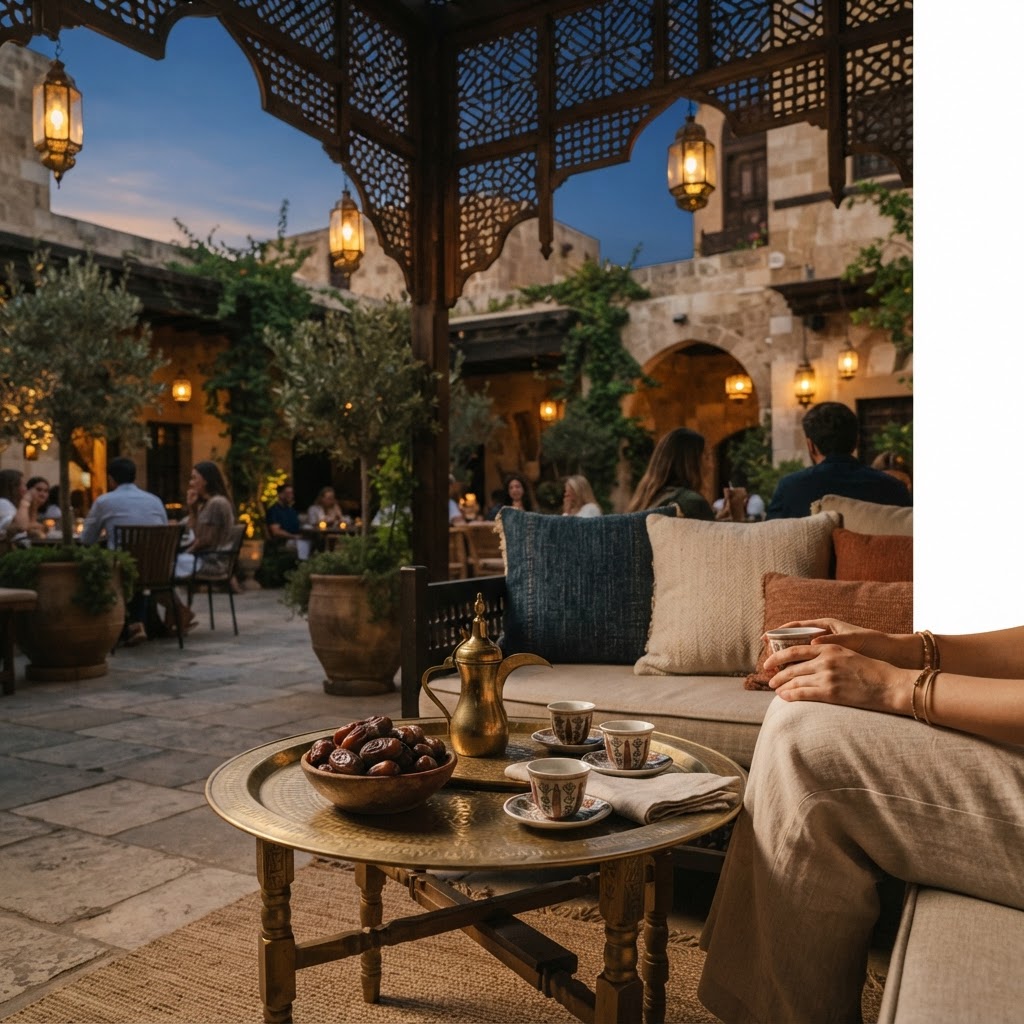
Saudi Arabia Is Undergoing An Ambitious Socio-economic Transformation. At The Core Of This Evolution Is Vision 2030, A Comprehensive Blueprint Designed To Diversify The Economy And Open The Nation To Global Tourism. Shifting The Focus From Religious Pilgrimage Toward High-end Leisure Has Created An Unprecedented Landscape For Hospitality Concept Development Saudi Arabia, Where Developers Must Navigate A Brand-new Territory Of Guest Experiences. The Scale Of Vision 2030 Hotel Development Goes Beyond Adding Rooms; It Is About Creating New Destinations And Introducing World-class Experiences. From The Pristine Red Sea Coast To The Futuristic Vision Of Neom, The Kingdom Is Establishing Itself As A Global Hospitality Hub. For A Consulting Firm Like The Concept Artisan (Tca), Success In This Landscape Requires A Strategic Blend Of Cultural Respect, Visionary Storytelling, And Commercial Pragmatism.
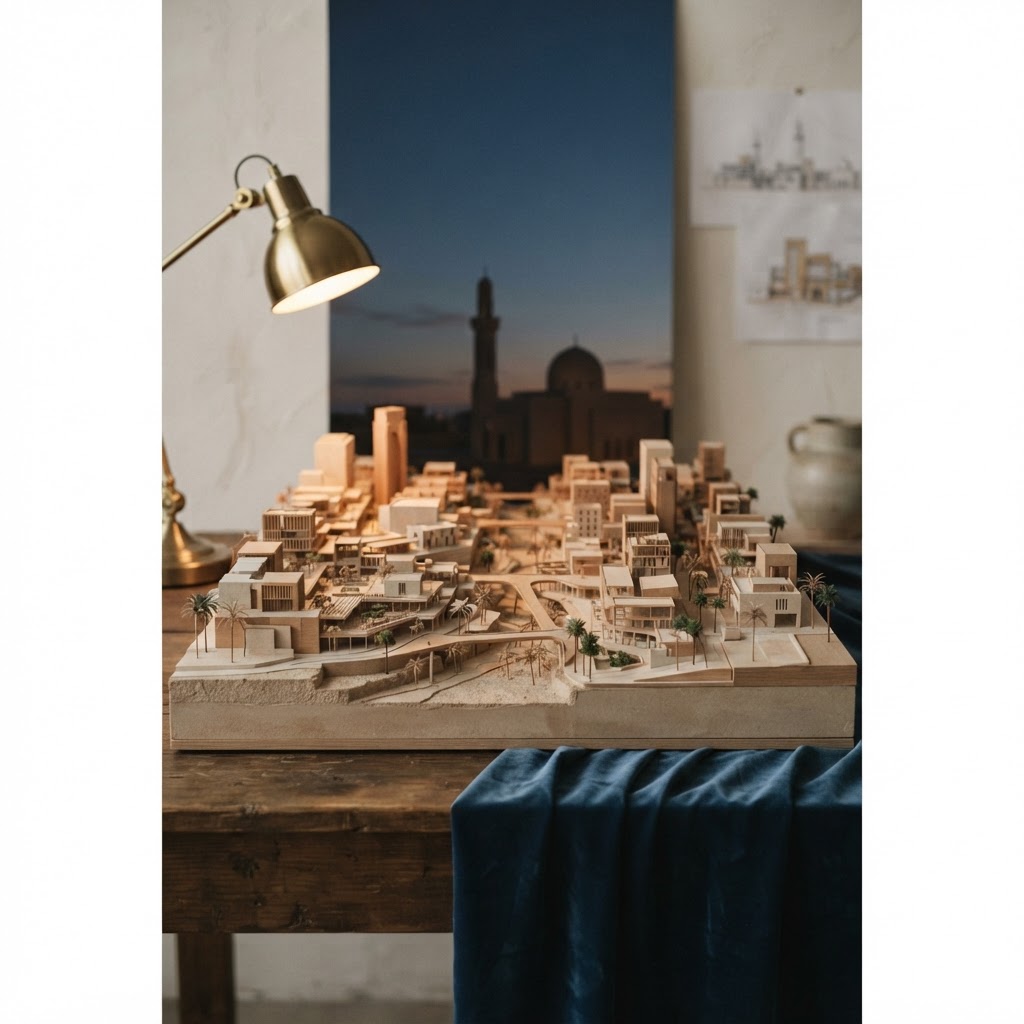
1: THE SAUDI TRANSFORMATION: VISION 2030 AND THE HOSPITALITY OPPORTUNITY
Saudi Arabia is undergoing an ambitious socio-economic transformation. At the core of this evolution is Vision 2030, a comprehensive blueprint designed to diversify the economy and open the nation to global tourism. Shifting the focus from religious pilgrimage toward high-end leisure has created an unprecedented landscape for hospitality concept development Saudi Arabia, where developers must navigate a brand-new territory of guest experiences. The scale of Vision 2030 hotel development goes beyond adding rooms; it is about creating new destinations and introducing world-class experiences. From the pristine Red Sea coast to the futuristic vision of NEOM, the Kingdom is establishing itself as a global hospitality hub. For a consulting firm like The Concept Artisan (TCA), success in this landscape requires a strategic blend of cultural respect, visionary storytelling, and commercial pragmatism.
1.1 The Domestic Engine: Why Saudi Hospitality is not Waiting for the World
Most international commentary on Saudi hospitality focuses on the expected arrival of global leisure tourists. The data tells a different story. In 2025, Saudi Arabia recorded 123 million visitors. 93 million of those were domestic. That is 76 percent. Domestic tourism grew another 16 percent in early 2026 alone.
Historically, Saudi Arabia's hospitality industry was dominated by corporate travel and religious tourism. Of the 29.3 million international visitors in 2025, a significant portion came for pilgrimage. 16.92 million Umrah pilgrims were recorded. Religious tourism generates approximately $12 billion annually and accounts for roughly 20 percent of non-oil GDP.
The current transformation introduces a massive leisure tourism segment, but the primary audience is already inside the country. Saudis are traveling, spending and dining out at a scale that most outside observers do not register. This shift requires entirely new hospitality products, ranging from ultra-luxury desert resorts to immersive heritage hotels, serving a domestic audience that is sophisticated, young and globally exposed while maintaining deep cultural pride.
1.2 The Entertainment and Sports Ambition
Saudi Arabia is positioning itself at the global forefront of entertainment and sports. The Kingdom has invested over $6 billion in sports since 2021, building a $13 billion entertainment sector from scratch. Riyadh Season 2025 broke records with 20 million visitors. The Esports World Cup drew 300,000 international visitors during what was historically Riyadh's slowest tourism season. The 2026 calendar targets 8,500 entertainment events, 85 international concerts and 240 sports tournaments.
This ambition is real and the investment is unprecedented. But the audience for these events is still overwhelmingly domestic. The entertainment strategy is driving domestic engagement and spend, but it has not yet converted significantly into international overnight stays. For hospitality developers, this means the primary guest profile for most new openings in the next five years is still Saudi.
1.3 Why "Build It and They Will Come" is Harder for KSA
Saudi Arabia faces structural tourism challenges that Dubai did not. The e-visa programme currently covers 66 countries compared to Dubai's near-universal access. The giga-projects are geographically dispersed across a country the size of Western Europe. And Saudi Arabia is working against a 20-year brand-building gap in leisure tourism perception.
This does not mean the ambition is wrong. It means the timeline is longer than the project announcements suggest, and that hospitality concepts developed now need to work commercially with a primarily domestic audience for the first several years. International guests will come, but they need a reason that goes beyond the novelty of a new destination.
1.4 Reimagining the Guest Experience Under Vision 2030
Vision 2030 is not just about new hotels. It is about redefining what Saudi hospitality means. Concepts must be rooted in cultural authenticity while meeting global service expectations. The government wants world-class experiences that are distinctly Saudi, not imported replicas of what already exists in Dubai or London.
This creates a clear brief for hospitality concept developers: understand Saudi culture deeply enough to build something that feels genuinely rooted, then layer world-class execution on top. That is a significantly more complex brief than most developers initially recognise.
2: THE CRITICAL ROLE OF HOSPITALITY CONCEPT DEVELOPMENT SAUDI ARABIA
Vision 2030 is allocating unprecedented capital to tourism infrastructure. But capital alone does not create compelling destinations. The missing ingredient is concept clarity: what is the identity of this place, who is it for, and why will guests choose it over everything else available to them?
2.1 Calibration, Not Replication: What Dubai Brands Teach Us
The narrative that Dubai concepts fail in Saudi Arabia is too simple. The more accurate observation is that concepts which replicate without calibration struggle, while those that invest in understanding the local context can perform well.
Sunset Hospitality (Sushi Club, Coya, STK), Bulldozer Group (Zuma, Scalini, Amazonico), GAIA and Kinoya have all expanded into Saudi Arabia from Dubai. Several are performing well. The difference between those that work and those that struggle is calibration: adapting menu composition, spatial zoning for family sections, service rituals that respect local expectations, and operational timing that reflects Saudi dining patterns.
For concept developers, this means that brand equity does transfer, but only when the concept is treated as a living system rather than a fixed product. Calibration is not compromise. It is market intelligence applied to execution.
2.2 Empowering Vision 2030 Hotel Development Through Localized Storytelling
The most compelling hospitality concepts in Saudi Arabia will not be the ones that import global trends most efficiently. They will be the ones that tell Saudi stories in a globally fluent language. Heritage, geography, gastronomy, craft and community are all underutilised assets in current Saudi hospitality development.
The Red Sea has a distinct coastal culture. The Hejaz region has one of the most sophisticated urban food traditions in the Arab world. AlUla has a landscape and heritage that is genuinely unlike anywhere else on earth. Concepts anchored in these realities, interpreted through a contemporary lens, have a defensible position that imported concepts cannot replicate.
3: THE SAUDI HOSPITALITY LANDSCAPE: GIGA-PROJECTS AND REGIONAL GROWTH
Understanding where the investment is concentrated is essential for any developer considering the Saudi market.
3.1 NEOM and the Red Sea: Future-Forward and Eco-Luxury
NEOM represents the most ambitious urban development project in human history. THE LINE, SINDALAH, AQABA and TELOS are all components of a broader vision to create a new kind of city and destination. For hospitality developers, NEOM presents both the largest opportunity and the highest execution risk. The concepts required here must work at a scale and with a futurism that most operators have not yet imagined.
The Red Sea Project (now AMAALA and Red Sea Global) is developing a luxury eco-tourism destination of genuine global significance. The brief here is different: ultra-luxury, sustainability-first, marine conservation at the core. Concepts that cannot credibly commit to environmental responsibility will not fit this context.
3.2 Riyadh Growth and the Rise of Secondary Cities
Riyadh is the primary commercial hospitality market and will remain so for the foreseeable future. The city is growing rapidly, the corporate travel base is strong and the domestic leisure market is accelerating. F&B concepts in particular are finding strong demand in Riyadh's emerging dining districts.
Jeddah retains its position as Saudi Arabia's most internationally-oriented city with the most established dining culture. Secondary cities including AlUla, Abha and Tabuk are emerging as heritage and eco-tourism destinations with genuine concept development opportunities for operators willing to work at smaller scale.
4: CULTURAL CONTEXT: BALANCING TRADITION WITH GLOBAL STANDARDS
Cultural competence is not optional in Saudi Arabia. It is the price of entry.
4.1 Respecting Social Norms in the Modern Era
The social reforms of the Vision 2030 era have created genuinely new possibilities. Mixed-gender dining, entertainment venues, cinemas and live events are now part of daily Saudi life in major cities. The pace of change has been remarkable.
But modernity in Saudi Arabia does not mean the abandonment of cultural values. Family remains central. Privacy is valued. Spaces need to accommodate different social configurations. Operators who approach Saudi Arabia with a simple checklist approach to compliance, rather than genuine cultural understanding, consistently underperform.
4.2 Integrating Hafawah: The Saudi Art of Guest Welcome
Hafawah is the Saudi tradition of generous, warm hospitality. It is not a service standard or a training module. It is a cultural value that shapes how guests expect to be received. Concepts that integrate Hafawah authentically, not as a performative gesture but as a genuine design principle, consistently generate stronger guest loyalty in the Saudi market.
This has practical implications for space design, staff selection, service choreography and menu composition. The guest should feel that this place was made for them, not that they have been accommodated in a concept designed elsewhere.
5: F&B STRATEGY FOR SAUDI HOTELS: THE DRIVER OF POSITIONING AND COMMUNITY
In Saudi Arabia, F&B is not an amenity. It is the primary driver of hotel positioning and community engagement.
5.1 The Role of F&B in Hotel Positioning
Saudi dining culture is sophisticated and socially central. Restaurants, cafes and social dining experiences are among the primary ways that families and social groups engage with hospitality venues. A hotel with weak F&B is a hotel without a reason to visit for the majority of the population.
The most successful F&B concepts in Saudi Arabia are standalone destination brands. Some, like LPM at the Mandarin Oriental Al Faisaliah, happen to sit within hotel complexes. Others, like ZUMA in KAFD, operate entirely independently. What they share is their own identity, their own community and their own reason to exist beyond serving hotel guests. Hotels that try to run F&B as an amenity rather than as a destination brand consistently lose to the standalone operators across the street.
5.2 The Critical Importance of Family-Friendly and Lifestyle Concepts
Saudi family structure creates specific spatial requirements. Family sections, appropriate privacy configurations and child-friendly elements are not optional additions. They are core design requirements for any concept targeting the primary Saudi guest profile.
At the same time, the growth of the Saudi millennial and Gen Z segment is creating strong demand for lifestyle concepts: specialty coffee, plant-forward dining, immersive dining experiences and concept-led social spaces. Both markets are real and both require different design responses.
5.3 The Talent Gap as a Design Constraint
Saudi Arabia's hospitality growth is outpacing its talent pool. The Saudization programme (Nitaqat) requires increasing proportions of Saudi nationals in hospitality roles, but the industry has historically struggled to attract Saudi talent into front-of-house positions.
This creates a genuine design constraint. Concepts that require highly complex service choreography or deep specialist knowledge are operationally fragile in this environment. Operational simplicity, strong training systems and career progression frameworks are not just HR considerations. They are concept design requirements.
6: THE TCA METHOD APPLIED TO SAUDI ARABIA: FROM DISCOVERY TO EVOLUTION
The TCA Method provides a structured framework for navigating the complexity of Saudi hospitality development.
6.1 Discover and Define: Uncovering Local Narratives
The Discover phase in Saudi Arabia requires deeper cultural immersion than most markets. This means engaging with local communities, understanding regional variations, mapping existing hospitality experiences and identifying the white spaces that are genuinely available.
The Define phase translates this intelligence into a clear concept brief: the guest profile, the positioning, the experience principles and the commercial model. In Saudi Arabia, this phase must include a realistic assessment of the regulatory environment and the cultural parameters within which the concept will operate.
6.2 Design and Validate: Crafting and Testing the Concept
The Design phase develops the full concept system: identity, spatial experience, menu architecture, service model and operational framework. Validation in Saudi Arabia requires both quantitative market testing and qualitative cultural validation with target audiences.
The TCA Concept Validation Framework assesses concepts across ten dimensions, with particular attention to Cultural Alignment and Place and Community Fit in the Saudi context. Concepts that score poorly on these dimensions in validation rarely recover post-launch.
6.3 Deliver and Evolve: Implementation and Post-Launch Agility
Implementation in Saudi Arabia requires close attention to the supply chain, construction timelines and regulatory approvals that consistently affect project delivery. The Evolve phase is particularly important in a market that is changing as rapidly as Saudi Arabia. Concepts must be designed for adaptation, not just for opening.
7: CASE STUDY: KIMYONA AND THE DARKROOM METAPHOR
KIMYONA is a Modern Asian dining concept developed by TCA for the Saudi market, currently operating in Riyadh. It illustrates the application of the TCA Method in the Saudi context.
7.1 The Darkroom Metaphor in Concept Development
TCA uses the darkroom metaphor to describe the concept development process. In traditional photography, the image exists on the negative from the moment the shutter closes. The darkroom is where the developer works with precision, patience and skill to bring that image to light. Rush the process and the image is lost.
KIMYONA began with a clear brief: a Modern Asian concept for a Saudi audience that felt genuinely contemporary without feeling imported. The discovery phase revealed that Saudi diners had high familiarity with Japanese aesthetics through travel and social media, but limited access to a truly considered Asian dining experience at home.
7.2 Application and Positioning in the Saudi Market
The concept was designed around three principles: visual drama (the theatre of the dining experience), ingredient authenticity (sourcing that supported credible Asian positioning) and cultural accessibility (spatial zoning, menu composition and service choreography calibrated for Saudi social norms).
The result is a concept with a defensible market position that resonates with both Saudi nationals and international visitors. KIMYONA demonstrates that calibration, not replication, is the appropriate model for introducing global dining languages into the Saudi market.
8: THE TCA CONCEPT VALIDATION FRAMEWORK FOR SAUDI PROJECTS
Before committing capital to a Saudi hospitality project, every concept should be evaluated against the TCA Concept Validation Framework.
8.1 Place and Community Fit
Does the concept belong in this specific location? Is there a genuine community need or desire for this experience? Saudi Arabia's regional variation means that a concept validated for Riyadh may not automatically work in Jeddah or AlUla.
8.2 Strategic Differentiation and Cultural Alignment
Is the concept genuinely different from what already exists? And does it operate within the cultural parameters of its target market in a way that feels authentic rather than compliant? These two dimensions are the hardest to achieve simultaneously and the most important for long-term commercial performance.
9: COMMON PITFALLS IN SAUDI ARABIA HOSPITALITY DEVELOPMENT
The most common failures in Saudi hospitality development follow recognisable patterns.
9.1 Importing Concepts Without Adaptation
Operators who treat Saudi Arabia as an extension of their existing market consistently underperform. The assumption that a concept that works in Dubai, London or New York will work in Riyadh without significant adaptation has been proven wrong repeatedly. The market is sophisticated enough to recognise when it has been treated as an afterthought.
9.2 Underestimating Cultural Nuances and Over-Relying on Brands
Brand equity has limits in Saudi Arabia. Guests are increasingly discerning and increasingly aware of the gap between brand promise and local execution. Concepts that rely on brand recognition to substitute for genuine market understanding consistently underperform against locally developed alternatives.
10: STRATEGIC RECOMMENDATIONS FOR DEVELOPERS ENTERING SAUDI ARABIA
For developers and operators considering the Saudi hospitality market, the following principles should guide concept development.
10.1 Invest Heavily in Discovery and Local Research
The discovery phase is not optional and cannot be abbreviated. The cost of genuine cultural immersion is significantly lower than the cost of a failed concept. Commission local research, engage Saudi creatives and spend time in the market before committing to a concept direction.
10.2 Embrace the Saudi Talent Revolution and Validation
The Saudization of the hospitality workforce is not a compliance burden. It is a competitive opportunity. Operators who invest in developing Saudi talent, creating genuine career pathways and building training systems designed for the local context will have a structural operational advantage within five years. Validate every concept against the TCA Framework before launch. The ten-dimension assessment consistently identifies fatal flaws before they become expensive mistakes.
The Saudi hospitality market is one of the most significant development opportunities in the world. The developers who succeed will be those who treat cultural intelligence as a strategic asset, not a compliance checkbox. The TCA Method exists to support exactly that kind of development. Contact The Concept Artisan to explore how the TCA Method can be applied to your Saudi Arabia project.