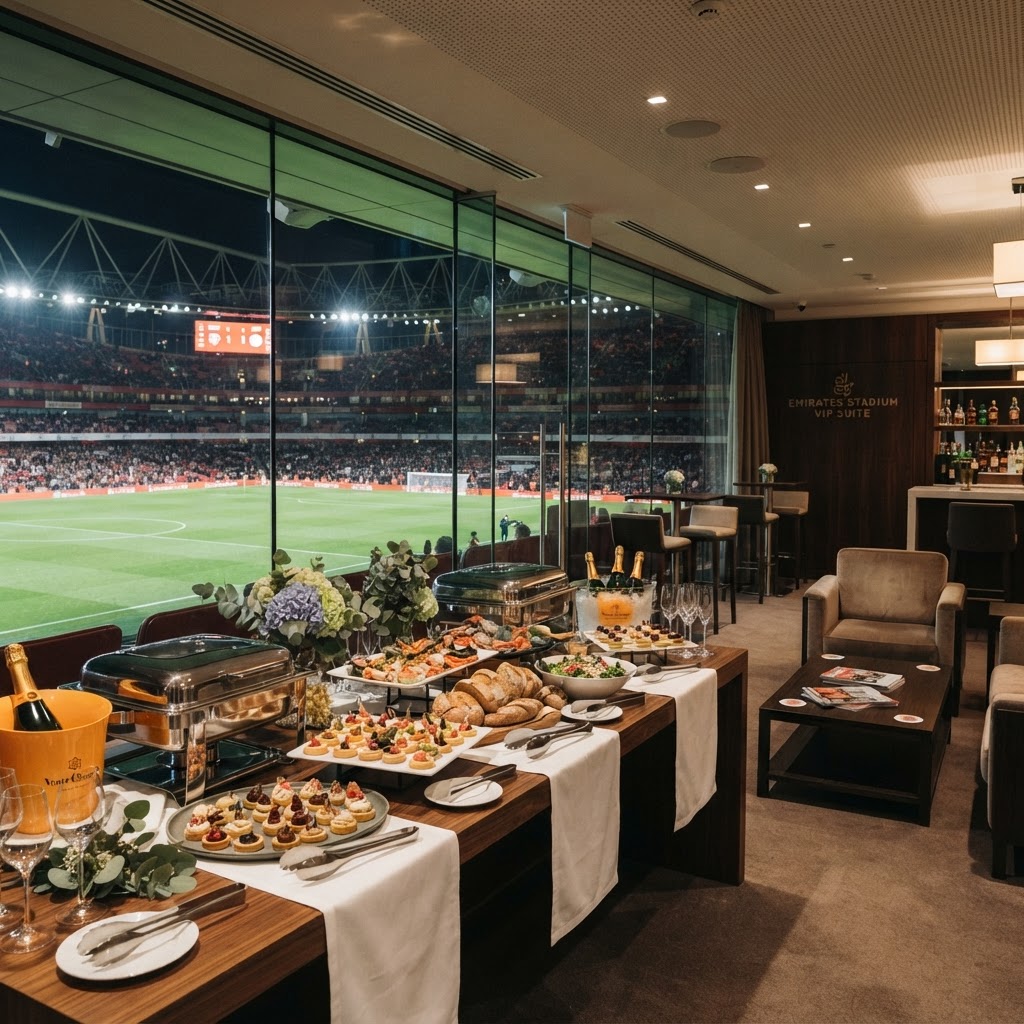
A Major Football Stadium In Abu Dhabi Was Facing A Challenge Common To Sports Venues Across The Region: A World-class Facility That Generates Significant Revenue On Matchday And Near-zero Revenue On The 300+ Other Days Of The Year. The Strategic Brief Was To Reposition The Stadium Not As A Sports Venue With Hospitality, But As A Year-round Lifestyle Destination Where Football Is One Of Several Compelling Reasons To Visit.
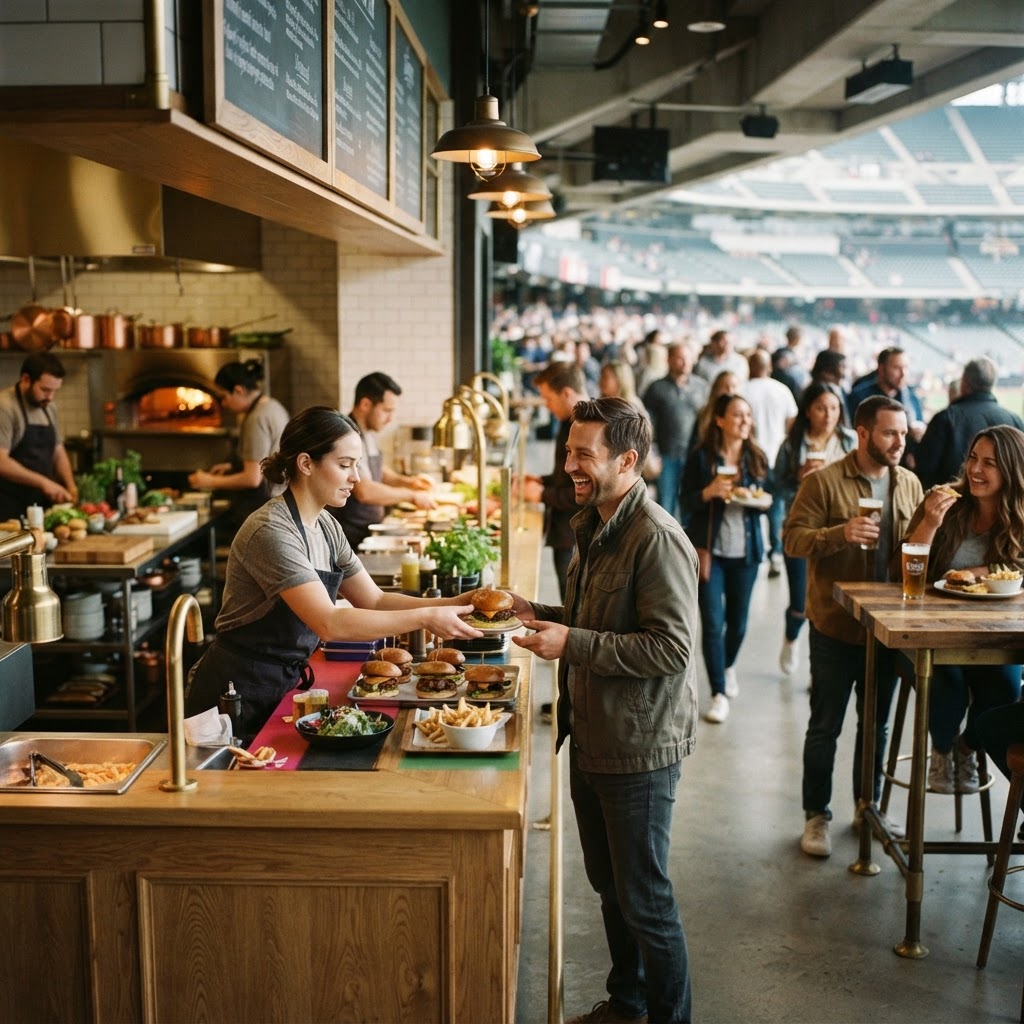
CASE STUDY: A MAJOR FOOTBALL STADIUM — F&B STRATEGY FOR A 365-DAY DESTINATION
The Challenge
A major football stadium in Abu Dhabi was facing a challenge common to sports venues across the region: a world-class facility that generates significant revenue on matchday and near-zero revenue on the 300+ other days of the year. The strategic brief was to reposition the stadium not as a sports venue with hospitality, but as a year-round lifestyle destination where football is one of several compelling reasons to visit.
The vision was defined in a single statement: a lifestyle experience where culture, football, and innovation meet. Each word carried strategic weight. Culture meant the venue had to programme beyond sport. Football meant the core identity of the venue could not be diluted. Innovation meant the F&B, design, and guest experience had to reflect forward-thinking hospitality thinking, not the tired formula of stadium food courts and fixed concessions.
Translating this vision into operational F&B strategy required answering three questions that do not arise in conventional restaurant concept work: What is the right operator model for a multi-outlet venue of this scale? How do BOH space allocations differ from a standard restaurant benchmark? And how do you design an F&B experience that serves completely different audiences and occasions — matchday, events, and everyday community use — within the same physical infrastructure?
The Approach: Three Operational Modes
The first structural decision was to treat the venue not as a single hospitality operation but as three distinct operational modes, each with its own audience, occasion, and commercial logic:
Matchday: The stadium's primary audience. High volume, time-compressed, emotion-driven. F&B priorities are speed of service, atmosphere, and symbolic moments — the pre-match energy, the half-time rush, the post-match celebration. Commercial logic: maximise spend per head over a compressed two-to-three hour window.
Entertainment & Events: Concerts, corporate events, community activations. A mixed audience with longer dwell time and higher spend potential than matchday. F&B priorities are quality, experience, and flexibility. Commercial logic: maximise revenue per event, with premium pricing justified by experience quality.
365 Community & Corporate: The permanent daily audience that makes the venue commercially sustainable year-round. Coffee, co-working, lunch, after-work drinks. The F&B must give the local community a reason to treat the stadium as a neighbourhood asset, not an event destination. Commercial logic: lower per-visit spend but high frequency and loyalty.
This three-mode framework became the lens through which every F&B decision was evaluated. A decision that optimised for matchday but damaged the everyday experience was a bad decision. A decision that elevated the everyday experience without compromising matchday capacity was a good one.
The Operator Model Decision
The most consequential strategic decision for any large venue is the operator model: should the stadium self-operate its F&B, concession it to a specialist, enter a joint venture, or retain management oversight via a management fee arrangement?
A weighted scoring framework was developed to evaluate the four models across six criteria:
Flexibility & Control: the venue's ability to enforce brand standards and adapt the F&B offer as the market evolves.
CapEx Impact: the upfront investment required to establish the F&B operation.
Profitability: the likely financial return across a 5-10 year horizon.
Staffing Feasibility: the operational burden of recruiting, training, and retaining the required team.
365 Scalability: the ability to serve all three operational modes effectively.
Operational Efficiency: the efficiency of the supply chain, kitchen infrastructure, and service model across different event types.
Each criterion was scored 1-5 and weighted according to strategic priorities. The conclusion was a hybrid governance structure: Joint Venture for the high-volume General Admission zones, and Management Fee for the Premium, Corporate, and back-of-house functions. Two models, one venue, each applied where it was best suited.
This hybrid approach performs better than a single uniform model across large, tiered venues precisely because different zones have different commercial priorities, different audiences, and different operational requirements.
BOH Space: A Different Benchmark
Stadium F&B has a fundamentally different back-of-house logic from conventional restaurant design. A full-service standalone restaurant typically allocates 25-35% of total floor area to BOH. In a stadium supported by a Central Production Kitchen — where primary prep and cooking happens in a single centralised facility and finished products are distributed to outlet-level service points — the BOH requirement per outlet is 10-15%.
Applying the wrong benchmark wastes significant guest-facing area and reduces the revenue potential of every outlet in the venue. The right benchmark is venue-type specific, not generic — and knowing which benchmark applies to which venue type is part of the strategic value brought to large-venue hospitality projects.
International Benchmarks
The strategic validation was grounded in four international stadium benchmarks, each selected for a specific strategic insight:
Tottenham Hotspur Stadium: the benchmark for in-stadium F&B in football, with multiple premium destination restaurants, an on-site microbrewery, and a hospitality offer that drives non-matchday visits.
London Stadium: an example of adapting a purpose-built athletics venue for multi-use, and the F&B strategy required to serve an audience the venue was not originally designed for.
Etihad Arena, Abu Dhabi: the most directly comparable regional benchmark — a large-format entertainment venue in the same city, operating a successful 365-day F&B model.
Lusail Stadium, Qatar: the benchmark for World Cup-standard stadium hospitality in the GCC, and the closest regional example of international tournament-grade F&B operations.
Each benchmark was chosen not to replicate but to learn from. The question was not 'how did Tottenham do it?' but 'what specific decision at Tottenham is directly applicable to this venue, and how does it need to adapt for the Abu Dhabi context?'
The Outcome
The validation process produced a strategic F&B framework that transformed the brief from a general aspiration into a set of specific, testable decisions: the right operator model for each zone, the right BOH benchmark for a CPK-supported outlet model, the right experience design for each operational mode, and the right international comparators to learn from.
The project also established a replicable methodology for stadium and large-venue hospitality work: the three-mode framework (Matchday, Entertainment & Events, 365 Community & Corporate), the weighted operator model scoring matrix, and the CPK-adjusted BOH benchmark are all transferable tools for any multi-use sports or entertainment venue.
Note on Role: The F&B strategy work documented here was delivered as part of a broader consultancy team. The strategic validation, operational frameworks, and benchmarking methodology described above represent the specialist F&B advisory contribution to the project.
Key Lessons
-
Operator model selection is the most consequential strategic decision in large-venue F&B — and it must be made before outlet design is finalised. The operator model determines CapEx structure, revenue split, staffing model, and degree of brand control.
-
A hybrid operator model — different models for different zones — often outperforms a single uniform approach across a large, tiered venue.
-
BOH benchmarks are venue-type specific. A CPK-supported outlet model operates at 10-15% BOH, not the 25-35% standard for standalone restaurants. Using the wrong benchmark wastes guest-facing space and reduces commercial capacity.
-
The 365-day activation framing is a reusable structure for any venue trying to justify F&B investment beyond its primary peak use. Designing separately for Matchday, Entertainment & Events, and Everyday/Corporate turns a general aspiration into a testable operational plan.
-
International benchmarking adds value only if the right question is asked. 'What specific decision is applicable here, and how does it adapt to our context?' is strategic. 'How did they do it?' is descriptive.
-
A positioning vision statement is only useful if each element is dissected into what is being evaluated and what the validation focus is. Soft statements must become operational tests.
This case study documents the F&B strategic validation work for a major football stadium's redevelopment as a 365-day lifestyle destination in Abu Dhabi, UAE.