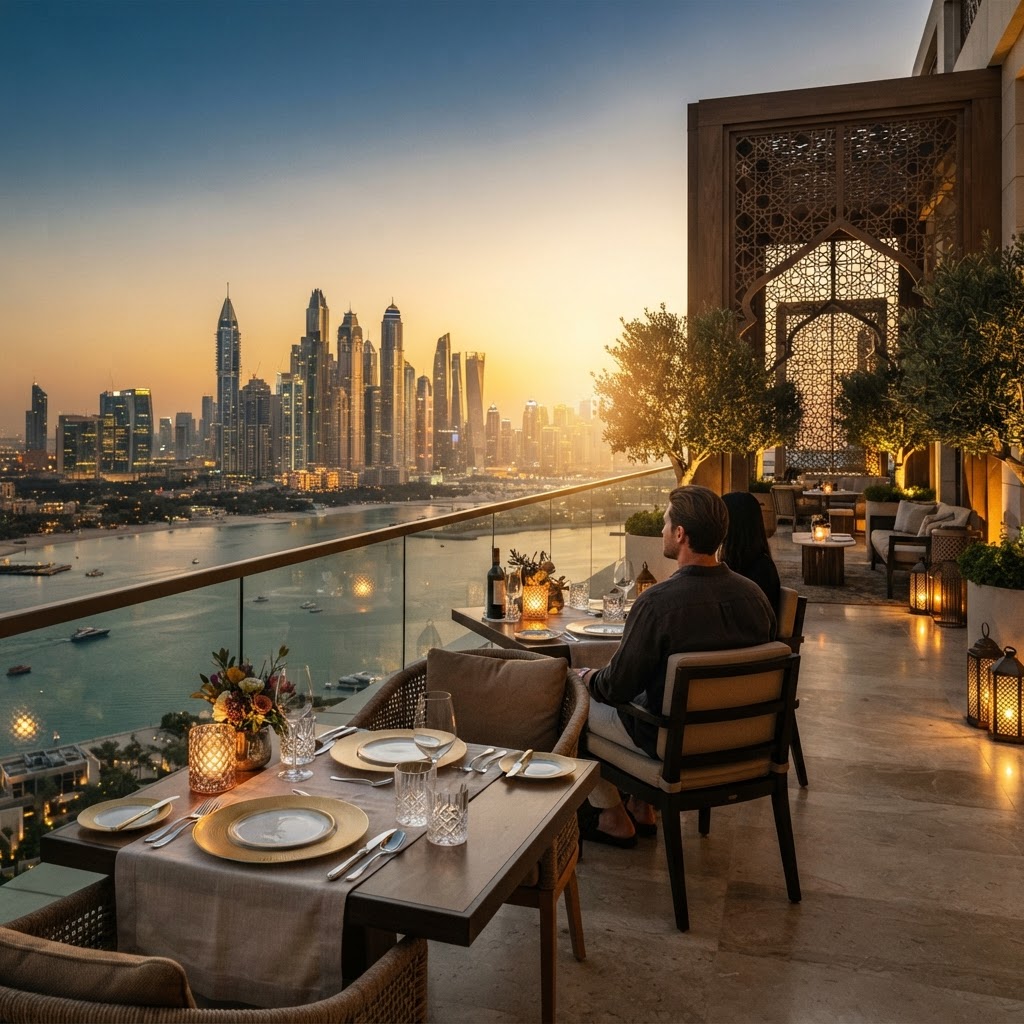
Formulating An Effective F&b Strategy Middle East Is The Ultimate Determinant Of Asset Value And Brand Equity In The Region. Throughout The Gcc, Food And Beverage Concepts Serve As The Heartbeat Of Hotels And Destinations, As Dining Out Is A Primary Social Activity And A Central Pillar Of National Development Plans. From Dubai's Ultra-luxury Corridors To Saudi Arabia's Transformative Megaprojects, The Region Is Undergoing An Unprecedented Development Cycle. Navigating This Landscape Requires A Deep Understanding Of Gcc Hospitality Concept Development, A Strategic Discipline That Bridges The Gap Between Grand Architectural Ambition And Operational Reality.
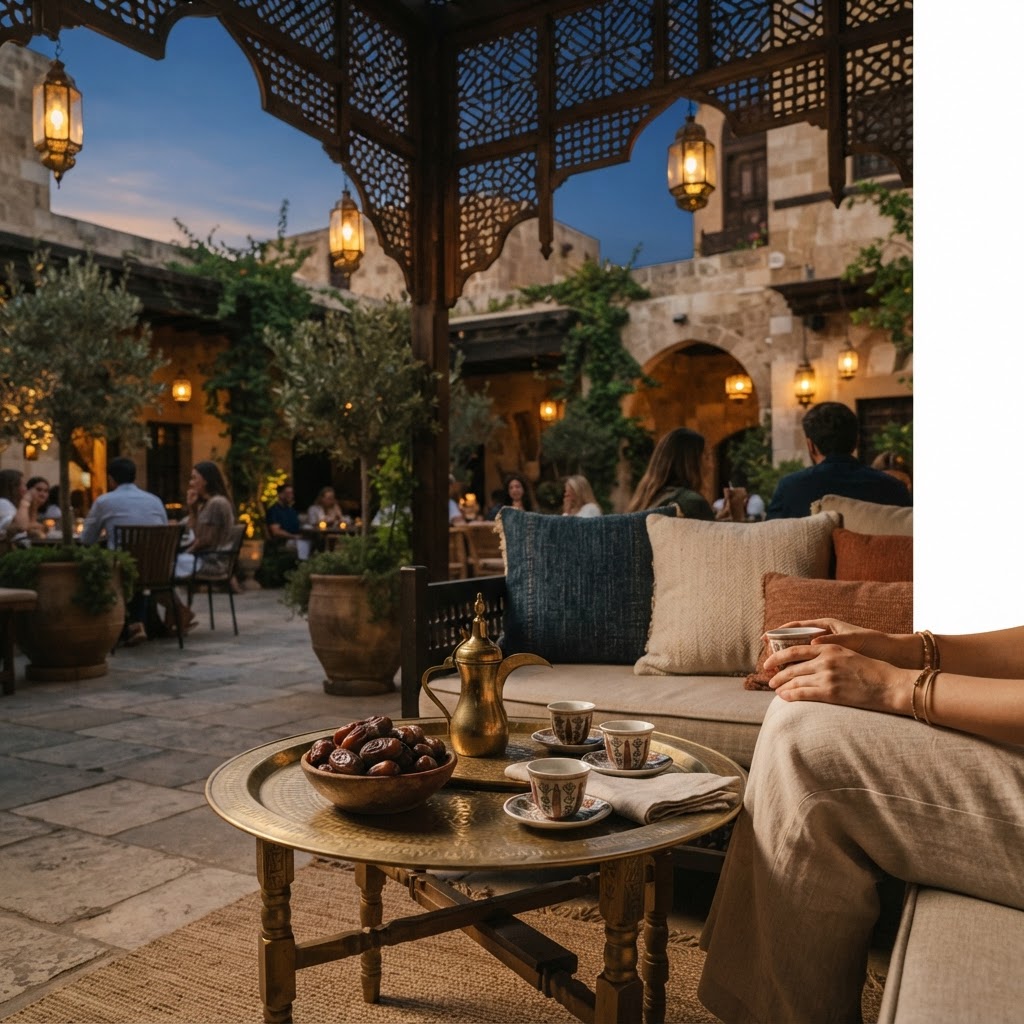
1. INTRODUCTION: WHY F&B STRATEGY MIDDLE EAST MATTERS IN THE GCC
Formulating an effective F&B strategy Middle East is the ultimate determinant of asset value and brand equity in the region. Throughout the GCC, food and beverage concepts serve as the heartbeat of hotels and destinations, as dining out is a primary social activity and a central pillar of national development plans. From Dubai's ultra-luxury corridors to Saudi Arabia's transformative megaprojects, the region is undergoing an unprecedented development cycle. Navigating this landscape requires a deep understanding of GCC hospitality concept development, a strategic discipline that bridges the gap between grand architectural ambition and operational reality.
In the GCC, hotel F&B is a primary destination driver rather than a secondary amenity. The regional concentration of luxury hospitality means that local residents and international travelers demand experiences that rival global culinary capitals. To capture market share, developers must treat F&B as a core differentiator, using it to activate spaces, build community relevance, and generate high-yield revenue. This makes a highly localized F&B strategy Middle East essential for any hospitality development in the region.
See also: GCC Hospitality Investment Patterns 2026 (gcc-hospitality-investment-2026)
2. THE GCC HOSPITALITY LANDSCAPE: A TALE OF TWO DISTINCT MARKETS
To formulate an effective F&B strategy Middle East, one must recognize that the regional landscape is characterized by two distinct markets: the matured, luxury-concentrated UAE and the rapidly transforming Saudi Arabia. Both markets present unique opportunities and challenges for GCC hospitality concept development, requiring completely different strategic playbooks.
The UAE hospitality sector is defined by structural maturation and an extraordinary concentration of luxury properties. Verified research indicates that Dubai hotel inventory reached approximately 158,700 rooms across 770 properties in 2025. In this competitive market, the luxury and upscale segment accounts for nearly 70% of total supply in Dubai. Furthermore, Dubai captured 63.49% of UAE's national hotel keys in 2025, demonstrating its status as the nation's dominant hospitality hub. This supply growth shows no signs of stopping: UAE hotel supply is projected to reach 217,853 rooms by the end of 2025, and expand to 235,674 by 2030. According to Knight Frank, over 23,000 new hotel rooms are expected in the UAE by 2030, with a staggering 43% of upcoming UAE keys in the luxury segment. For developers, the strategic challenge is standing out in an ultra-premium, crowded environment.
Saudi Arabia represents a massive transformation driven by Saudi Vision 2030, developing new leisure destinations like the Red Sea, AlUla, and Diriyah. Developers are building ecosystems from scratch, requiring concepts that serve as destination anchors. Both of these dynamics demand a rigorous approach to F&B strategy Middle East that aligns concepts with these distinct market realities.
See also: Hotel F&B Strategy (hotel-fb-strategy)
3. F&B AS POSITIONING: HOW FOOD AND BEVERAGE DEFINES THE HOTEL BRAND
In the GCC, hotel F&B is the most visible expression of brand identity, acting as a public stage. It is a fundamental truth in the regional market that the restaurants guests walk past tell them more about the hotel than the room itself. F&B venues establish a hotel's cultural relevance, design credentials, and target audience.
Therefore, hospitality concepts are not merely revenue centers; they are positioning tools. When a luxury hotel partners with a celebrated chef or develops a cutting-edge home-grown dining concept, it is communicating its brand values. A vibrant, high-energy restaurant in the lobby instantly signals that the hotel is modern, social, and culturally connected. Conversely, a traditional dining room communicates classic luxury. In a region where dining out is a cultural ritual, hotels that fail to curate a compelling F&B mix risk becoming irrelevant. An integrated F&B strategy Middle East ensures that every venue on the property works in harmony to reinforce the hotel's overarching brand positioning.
See also: Case Study — INDIKAYA (case-study-indikaya-brand-voice)
4. THE GCC CONCEPT DEVELOPMENT CHALLENGE: INTERNATIONAL STANDARDS VS LOCAL CONTEXT
A key challenge in GCC hospitality concept development is balancing international sophistication with cultural relevance. Historically, the region imported global brands directly. While this introduced high culinary standards, it often created a disconnect with the local audience.
Modern Middle Eastern guests are highly sophisticated and widely traveled. They appreciate international standards of design, service, and culinary execution, but they also demand authenticity and cultural attunement. True cultural integration requires a deep understanding of regional dining habits, social structures, and occasion mapping. For example, regional dining is frequently a communal, family-oriented activity requiring larger tables and sharing menus. Furthermore, concepts must navigate cultural sensitivities, such as designing atmospheric non-alcoholic beverage programs that offer the same complexity and theatrical presentation as premium cocktail bars. Successfully balancing these factors is the hallmark of sophisticated GCC hospitality concept development.
See also: Case Study — KIMYONA (case-study-kimyona)
5. OPERATING MODELS FOR GCC HOTELS: IN-HOUSE VS THIRD-PARTY OPERATORS
Selecting the right operating model is a highly consequential decision for developers in the region. The choice between operating a venue in-house, leasing the space to a third-party operator, or establishing a joint-venture partnership determines the property's capital expenditure, revenue potential, operational burden, and brand control.
In-house operation offers complete control over the guest experience, making it ideal for core hotel venues like lobby lounges and room service. However, running complex, high-energy dining venues in-house requires specialized restaurant expertise that hotel management companies often lack. This can lead to uninspired concepts that fail to compete with independent high-street restaurants.
To address this, hotels opt for third-party operators or brand partnerships. Leasing space to a restaurant group or local operator brings immediate brand equity and specialized management expertise. This model reduces operational burden and CapEx risk, but limits the hotel's share of the restaurant's upside. The most sophisticated developers utilize a hybrid F&B strategy Middle East, keeping essential community venues in-house while partnering with high-profile operators for signature dining destinations.
See also: Hotel F&B Strategy (hotel-fb-strategy)
6. THE TCA METHOD APPLIED TO GCC PROJECTS
At TCA, we address these regional dynamics through a disciplined, six-stage concept development methodology designed to manage risk and maximize viability. The TCA Method structures the process into six stages: Discover, Define, Design, Validate, Deliver, and Evolve.
In the Discover stage, we conduct market research, analyzing competitor landscapes to identify market white space. In the Define stage, we establish the concept's core DNA, positioning, and target guest personas, ensuring the strategic foundation is rock-solid. The Design stage translates this foundation into tangible brand assets, including spatial design direction, culinary philosophy, menu architecture, and brand voice.
We execute the Validate stage before implementation to ensure the concept is commercially and operationally sound. The Deliver stage involves creating the concept blueprints and training manuals required for execution. Finally, the Evolve stage ensures the concept remains relevant post-launch, establishing feedback loops and optimization strategies that allow the venue to adapt to changing market conditions. This structured method is essential for successful GCC hospitality concept development.
See also: Case Study — Al Jazira Stadium (case-study-al-jazira-stadium)
7. RELEVANT REGIONAL CASE STUDIES: INDIKAYA, KIMYONA, AND AL JAZIRA STADIUM
The application of these principles is demonstrated through three case studies from TCA's portfolio. Each project illustrates a different facet of GCC hospitality concept development and highlights how specialized strategic intervention can drive outstanding commercial and brand success.
First, INDIKAYA in Dubai represents a masterclass in brand voice as a complete language system for a chef-led restaurant. Developed with a world-renowned chef in Dubai, the venue had exceptional food but lacked a coherent brand language. TCA developed a language architecture including a brand strategy, tone guidance, a language deck, and front-of-house guide. This system operationalized brand values into concrete FOH behaviors and signature rituals. These included a scent ritual, ceremonial menu reveal, and sound cues, ensuring a coherent brand sound at all touchpoints.
KIMYONA in Saudi Arabia was designed around a photography 'darkroom' metaphor where light and darkness reveal the perfect image. Every design, operational, and branding decision was tested against this metaphor. TCA created a photography guide with defocused shots, silhouettes, and table settings to capture atmosphere without compromising privacy.
Third, the Al Jazira Stadium project in Abu Dhabi shows how to validate a multi-outlet, 365-day lifestyle destination beyond match days. Repositioning the stadium required managing three operational modes: Matchday, Entertainment & Events, and 365 Community & Corporate. TCA's Operator Model Scoring Framework recommended a hybrid governance model: Joint Venture for high-volume zones, and Management Fee for premium functions. The project utilized a central kitchen model to optimize back-of-house space allocation, saving revenue-generating areas.
See also: Case Study — INDIKAYA (case-study-indikaya-brand-voice) See also: Case Study — KIMYONA (case-study-kimyona) See also: Case Study — Al Jazira Stadium (case-study-al-jazira-stadium)
8. THE TCA CONCEPT VALIDATION FRAMEWORK FOR GCC PROJECTS
The TCA Concept Validation Framework is a proprietary tool that assesses concepts across ten distinct dimensions, each weighted according to its impact on commercial success. This framework is highly effective in evaluating whether a concept is genuinely ready for the GCC hospitality market.
The ten dimensions evaluated in the framework are:
- Market Opportunity (15% Weight): Evaluating local demand, competitive landscape, and white space.
- Guest Relevance (10% Weight): Ensuring the concept meets real behavioral and motivational needs.
- Strategic Differentiation (15% Weight): Verifying that the concept possesses a clear competitive advantage.
- Brand Coherence (10% Weight): Confirming that the narrative, design, menu, and service tell a single story.
- Guest Experience (10% Weight): Reviewing the end-to-end guest journey and signature moments.
- Operational Feasibility (15% Weight): Evaluating staffing models, kitchen complexity, and supply chain.
- Commercial Viability (15% Weight): Testing the financial foundations, revenue mix, and daypart strategy.
- Place & Community Fit (5% Weight): Ensuring the concept belongs in its location and amplifies its neighborhood.
- Future Readiness (5% Weight): Assessing long-term adaptability and technological integration.
- Investment Confidence (10% Weight): A holistic judgment on whether we would invest our own money in the concept.
Market Opportunity, Strategic Differentiation, Operational Feasibility, and Commercial Viability are non-negotiable hard gates where a score below 3 pauses development. In GCC hospitality concept development, we emphasize operational feasibility and cultural fit.
See also: GCC Hospitality Investment Patterns 2026 (gcc-hospitality-investment-2026)
9. COMMON FAILURE MODES IN GCC F&B OPERATIONS
Despite significant capital invested, the regional hospitality market is littered with failed concepts. An informed F&B strategy Middle East must actively mitigate these common failure modes.
The first failure mode is importing international concepts without local adaptation, assuming that a brand successful in London or New York will work identically in Riyadh or Dubai. They fail to adapt the menu for regional tastes, overlook local social dining patterns, or misjudge the significance of non-alcoholic beverage programs. This results in concepts that feel foreign and struggle to build local guest loyalty.
The second failure mode is over-scaling before validation, building massive venues based on optimistic forecasts without running a pilot phase. These oversized venues suffer from high operational costs, are difficult to fill during non-peak periods, and quickly lose their sense of buzz and atmosphere.
The third failure mode is misreading the regional guest profile, designing for generic demographics instead of specific behavioral motivations. In the GCC, guests select venues based on highly nuanced social needs, from corporate entertaining to private family gatherings. Failing to design the physical space, service style, and menu architecture to accommodate these diverse occasions inevitably leads to a commercial mismatch and concept failure.
See also: Hotel F&B Strategy (hotel-fb-strategy)
10. STRATEGIC RECOMMENDATIONS FOR DEVELOPERS ENTERING THE GCC
Entering the Middle Eastern market successfully requires strategic discipline, local empathy, and operational agility.
First, prioritize concept validation before committing CapEx. Validate the concept—especially commercial foundations—against the TCA Concept Validation Framework.
Second, design for specific behavioral occasions rather than demographics. GCC dining is highly social, requiring spatial flexibility and premium non-alcoholic programs.
Third, choose partnership models carefully. If you lack specialized restaurant management expertise, partner with established operators to bring discipline and brand equity.
By approaching GCC hospitality concept development with this level of strategic rigor, developers can create destination-defining concepts that deliver outstanding commercial returns and lasting brand value across this world-class hospitality region.
See also: GCC Hospitality Investment Patterns 2026 (gcc-hospitality-investment-2026)