How Food & Beverage Defines The Identity, Value, And Success Of Mixed-use Destinations
STRATEGIC GUIDE: MIXED-USE DEVELOPMENT F&B STRATEGY
How Food & Beverage Defines the Identity, Value, and Success of Mixed-Use Destinations
Mixed-use developments are the dominant format in contemporary real estate. Residential towers, offices, hotels, retail, and public realm are combined into single developments that promise to be 'live-work-play destinations.' But the promise usually exceeds the delivery. Most mixed-use developments feel like collections of buildings that happen to share an address — not destinations with a cohesive identity.
The element that most often determines whether a mixed-use development becomes a destination or remains a collection of buildings is F&B. Not architecture. Not retail. Not landscaping. F&B.
This guide defines the strategic framework for using food and beverage as the primary placemaking and value-creation tool in mixed-use developments.
PART 1: WHY F&B IS THE ANCHOR OF MIXED-USE DESTINATIONS
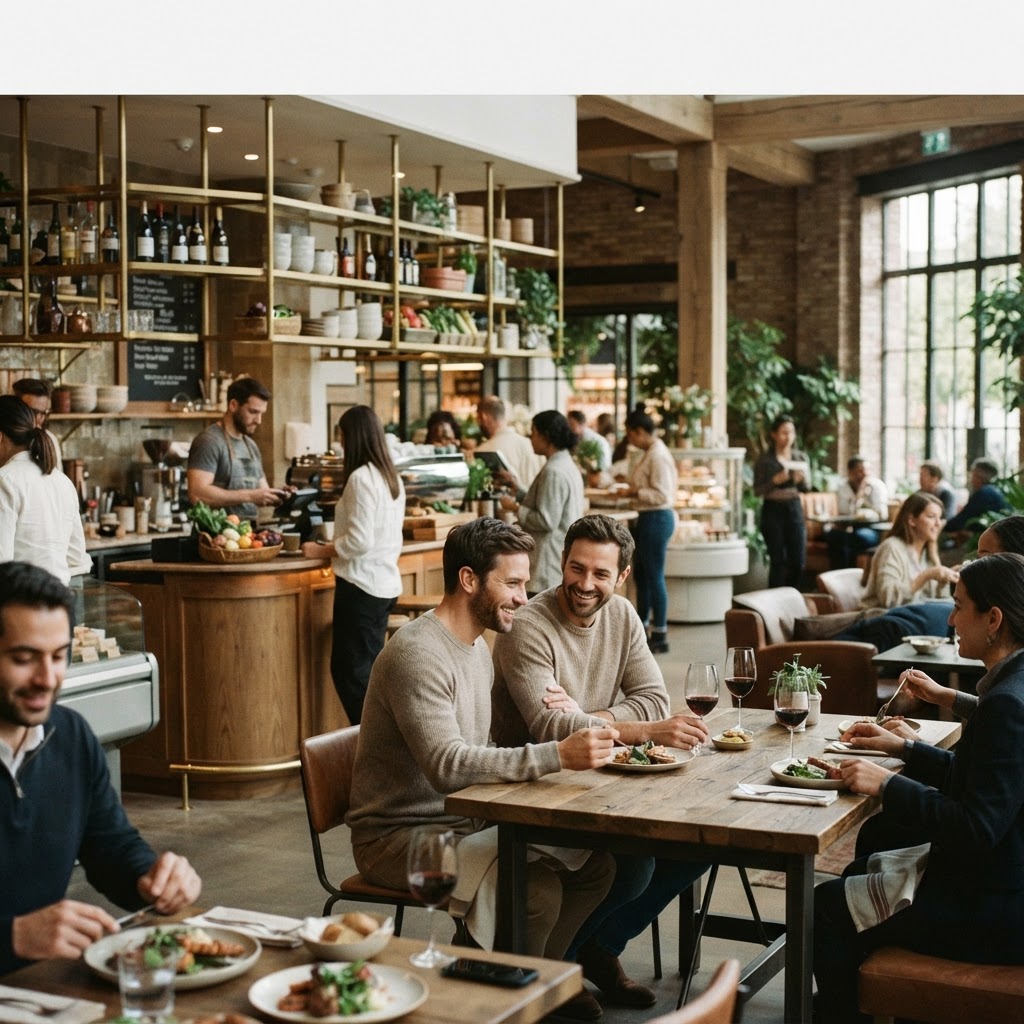
People go where there is food and drink. This is the single most reliable behavioural principle in real estate strategy. Retail is increasingly digital. Offices generate limited public activity. Residential is private. Hotels serve a transient audience. F&B is the only component that consistently generates public footfall, dwell time, and emotional connection.
In a mixed-use development, F&B serves three strategic functions:
-
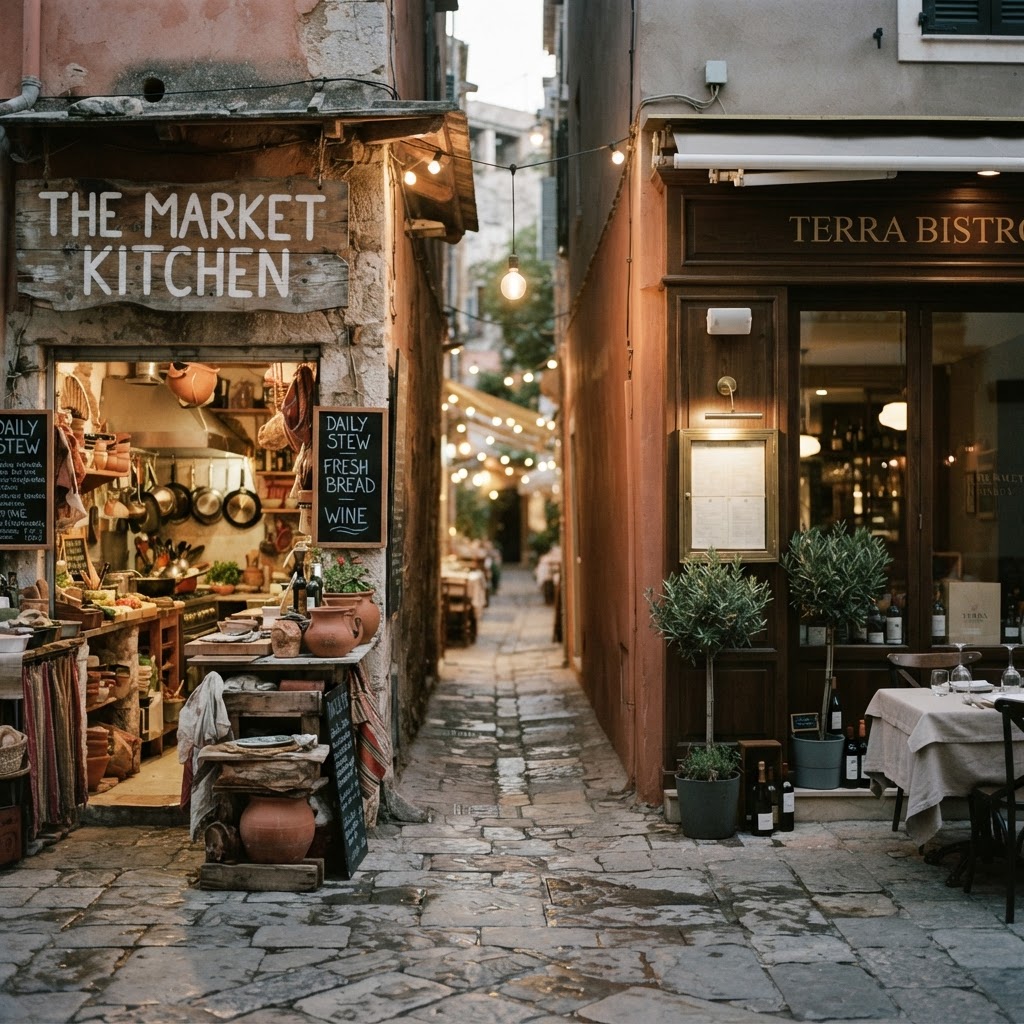
Identity creation: The F&B mix defines what the development is known for. A development with a destination restaurant, a specialty coffee bar, and a food hall has a different identity from one with three chain restaurants and a convenience store. The F&B mix IS the development's brand — more powerfully than any signage, logo, or marketing campaign.
-
Footfall generation: F&B drives visits. Those visits benefit every other component in the development. A resident who comes down for coffee also passes the retail. An office worker who stays for dinner also uses the valet. A hotel guest who visits the rooftop bar also recommends the development. F&B footfall is the rising tide that lifts all commercial boats.
-
Value uplift: The presence of quality F&B increases the value of every other component. Residential units above a destination restaurant command higher prices. Office space in a development with great F&B commands higher rents. Hotel occupancy is higher when the F&B is a destination in its own right. The F&B is not a cost centre — it is a value driver.
PART 2: THE F&B MASTER PLAN
A mixed-use development does not need 'restaurants.' It needs an F&B master plan — a strategic document that defines the total F&B offering, the role of each outlet, and how they work together to create a cohesive destination.
The master plan defines:
The F&B Mix Strategy The total F&B offering should be balanced across four categories:
-
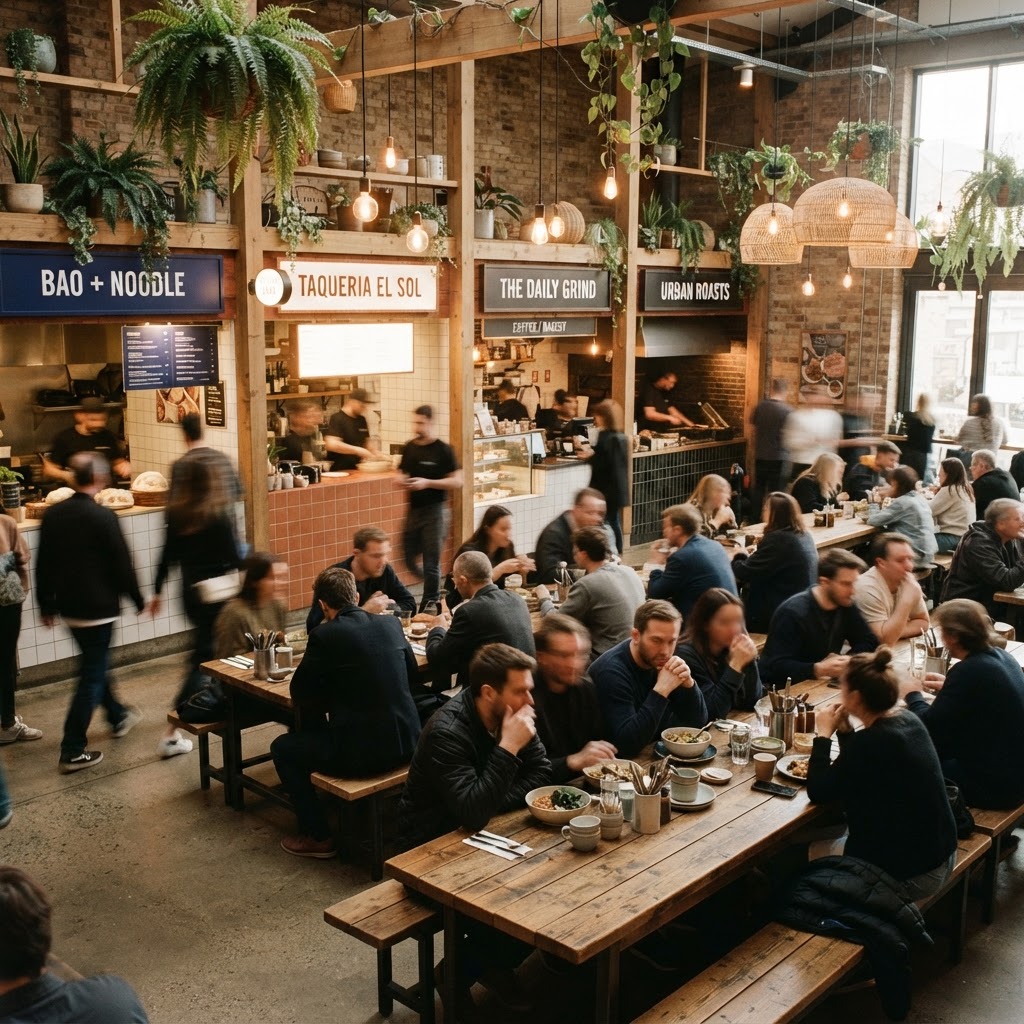
The Anchor: One or two destination concepts that draw traffic to the development. These are the venues that people travel to specifically — a signature restaurant, a rooftop bar, a food hall. The anchor is the reason people visit the development for the first time.
-
The Daytime Layer: Coffee bars, casual dining, and quick-service options that generate daytime footfall. These serve the residential and office populations and create the daily rhythm of the development. Without a strong daytime layer, the development is dead between 11 AM and 5 PM.
-
The Evening Layer: Bars, late-night dining, and entertainment concepts that generate evening energy. These extend the development's active hours and attract a different audience than the daytime layer.
-
The Service Layer: Essential F&B — a deli, a convenience food option, room service for the hotel. These are not destinations; they are amenities that make the development functional for its residents and guests.
The most common mistake is over-investing in the Anchor and under-investing in the Daytime Layer. A destination restaurant that draws weekend visitors cannot sustain a development's daily energy. The Daytime Layer is what makes the development feel alive on a Tuesday at 2 PM.
The Spatial Strategy F&B outlets should be distributed to create circulation, not concentrated in a single zone. The goal is to use F&B as a traffic generator that pulls visitors through the development, past retail and other components.
Key principles:
- Ground-floor F&B should activate the street edge and create a welcoming public realm.
- The anchor should be placed to draw visitors deep into the development, not at the entrance where it captures traffic without benefiting the rest.
- Daytime and evening F&B should be located to create natural transitions between zones — a coffee bar that becomes a bar in the evening bridges the gap between the office zone and the residential zone.
- Rooftop and upper-floor F&B should have dedicated vertical transport and a sense of destination — the journey is part of the experience.
The Daypart Strategy The development's F&B should operate across the full day, with each daypart serving a different primary audience:
- Morning (7-11 AM): Coffee, breakfast, grab-and-go. Primary audience: residents, office workers, hotel guests.
- Lunch (12-2 PM): Business lunch, casual dining, quick-service. Primary audience: office workers, local residents.
- Afternoon (3-5 PM): Coffee, meetings, remote work. Primary audience: freelancers, residents between activities.
- Evening (6-10 PM): Destination dining, social bars. Primary audience: residents, visitors, hotel guests.
- Late night (10 PM+): Bars, entertainment. Primary audience: social visitors.
A development whose F&B is only active during lunch and dinner is not a destination — it is a workplace with restaurants. The morning and afternoon dayparts are what make the development feel residential. The evening and late-night dayparts are what make it feel like a destination.
PART 3: OPERATOR STRATEGY FOR MIXED-USE DEVELOPMENTS
A mixed-use development typically involves multiple F&B operators — some leased, some managed, some joint ventures. The operator strategy must balance the development's need for control with the practical reality of F&B operations.
The key decision is which F&B to self-operate and which to outsource.
Self-operate: The anchor concepts that define the development's identity should be self-operated or managed under tight control. If the anchor restaurant is leased to a third party, the developer loses control over the concept that defines the development's brand.
Outsource: The service layer (deli, convenience, room service) can be outsourced to operators who specialise in functional F&B. The quality bar is competence, not distinction.
Partner: The daytime and evening layers can be structured as partnerships — either joint ventures or management agreements — where the developer retains influence over the concept but leverages the operator's expertise.
The operator model should be determined outlet by outlet, based on the strategic role of each F&B component — not uniformly across the development.
PART 4: THE F&B-INTEGRATED DEVELOPMENT STRATEGY
The most successful mixed-use developments treat F&B not as a tenant category but as a strategic asset that is integrated into every aspect of the development's design, marketing, and operations.
Design Integration F&B spaces should be designed as part of the development's architecture, not fitted into leftover ground-floor units. This means:
- The public realm is designed for outdoor dining and lingering.
- The ground-floor heights, depths, and servicing are designed for restaurant operations.
- The vertical transport strategy accounts for rooftop and upper-floor F&B.
- The MEP infrastructure supports kitchen exhaust, grease traps, and ventilation from day one — not retrofitted at the operator's expense.
Marketing Integration The development's marketing should lead with F&B. The destination restaurant is the headline. The food hall is the proof of variety. The rooftop bar is the image. Residential and office marketing should reference the F&B as a lifestyle amenity, not the other way around.
Operational Integration The development's operations should support F&B — not just tolerate it. This means:
- Servicing and delivery routes that don't conflict with residential or hotel operations.
- Waste management that handles F&B volume without impacting other components.
- Security and access strategies that allow late-night F&B operation without compromising residential security.
- A development-wide programming strategy that activates the public realm with events, markets, and seasonal celebrations that complement the F&B.
PART 5: COMMON STRATEGIC MISTAKES
Mistake 1: Treating F&B as fill F&B is often viewed as the tenant category that fills ground-floor units that retail doesn't want. This produces a random collection of restaurants with no strategic logic. The F&B mix should be curated, not filled.
Mistake 2: Over-reliance on chains Chain restaurants bring reliability and brand recognition, but they do not create destination identity. A development filled with the same chains available in every mall in the city has no distinctive reason to visit. Local, independent, or exclusive concepts create the identity that chains cannot.
Mistake 3: Ignoring the daytime layer Many developments focus their F&B investment on evening dining and nightlife, leaving the daytime to a single coffee chain. The result is a development that is vibrant at 8 PM and dead at 2 PM. The daytime layer is what makes a development feel like a neighbourhood, not just a nightlife district.
Mistake 4: No F&B master plan When each F&B unit is leased independently without a master plan, the result is duplication (three Italian restaurants), gaps (no Asian cuisine), and no strategic logic. The master plan ensures the mix is balanced, the dayparts are covered, and the overall F&B offering is greater than the sum of its parts.
Mistake 5: Underestimating the investment Quality F&B requires investment — in fit-out, in MEP infrastructure, in outdoor space, in servicing. Developers who budget for F&B as they would for retail are surprised by the cost. But the return — in footfall, in identity, in value uplift across all components — exceeds the investment when the strategy is right.
Mistake 6: No programming strategy F&B provides the infrastructure, but programming provides the rhythm. A development with great restaurants but no events, no markets, no seasonal activations is a place to eat, not a place to be. The programming strategy should be designed alongside the F&B master plan, not added as an afterthought.
PART 6: THE STRATEGIC FRAMEWORK
The complete mixed-use F&B strategy follows this sequence:
-
Define the development's identity: What is this development known for? The F&B mix should express this identity.
-
Conduct a market opportunity assessment: What F&B does the local market need that it doesn't have? The F&B mix should fill white space, not duplicate existing supply.
-
Develop the F&B master plan: Define the anchor, daytime, evening, and service layers. Balance the mix across cuisines, price points, and dayparts.
-
Define the spatial strategy: Distribute F&B to create circulation, activate the public realm, and extend the development's active hours.
-
Choose the operator model for each outlet: Self-operate anchors, outsource service layer, partner on daytime and evening.
-
Integrate F&B into the development's design, marketing, and operations.
-
Develop a programming strategy that complements the F&B and activates the public realm.
-
Measure success not just by F&B revenue but by total development footfall, dwell time, residential and commercial value uplift, and the development's emerging identity as a destination.
THE PRINCIPLE
A mixed-use development without a strategic F&B plan is a collection of buildings. A mixed-use development with a strategic F&B plan is a destination. The difference is not in the architecture or the location — it is in the thinking that determines what people eat, drink, and experience when they visit.
F&B is not a tenant category. It is the strategic anchor of mixed-use destination identity, footfall, and value. The developments that recognise this — that plan F&B as a strategic asset, not a ground-floor filler — become destinations that people choose, remember, and return to.
This guide is based on TCA's framework for mixed-use F&B strategy, developed through concept development work across the Middle East. For a tailored assessment of your development's F&B strategy, contact The Concept Artisan.