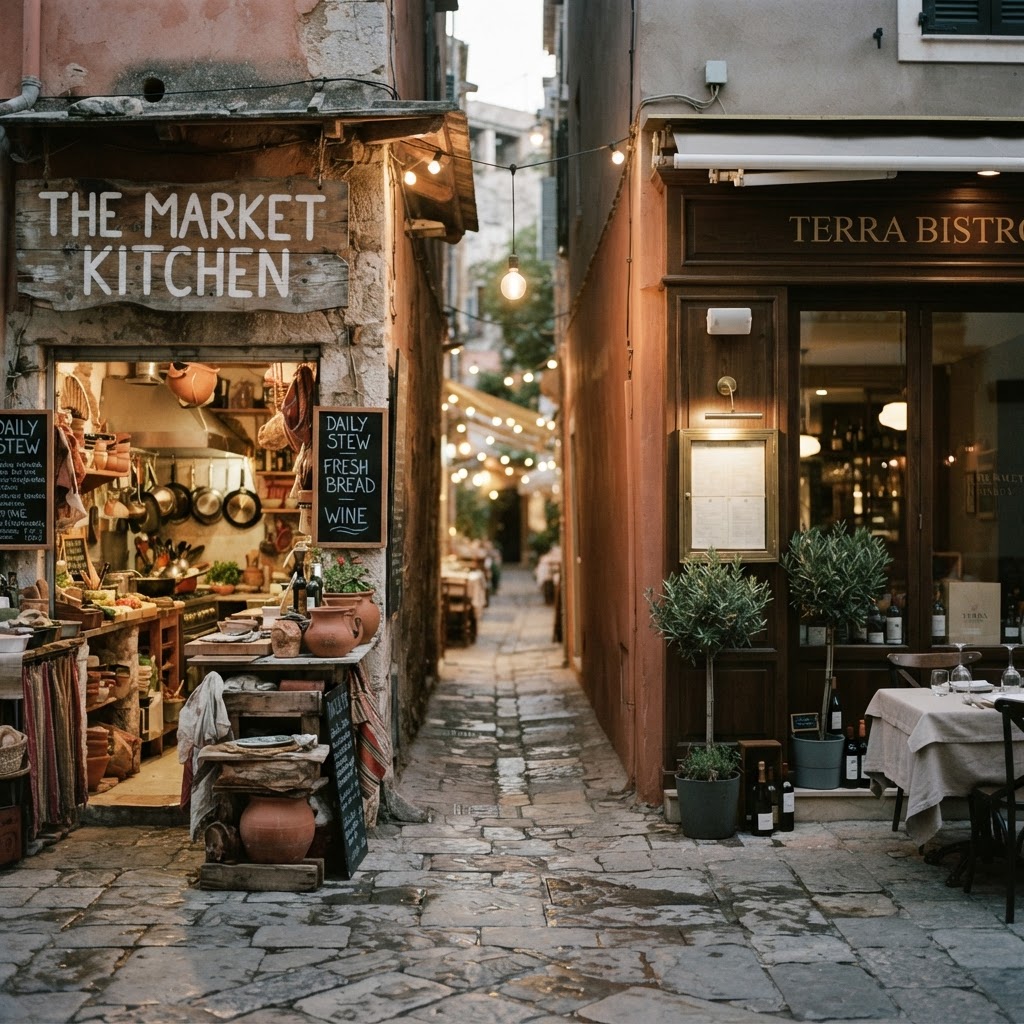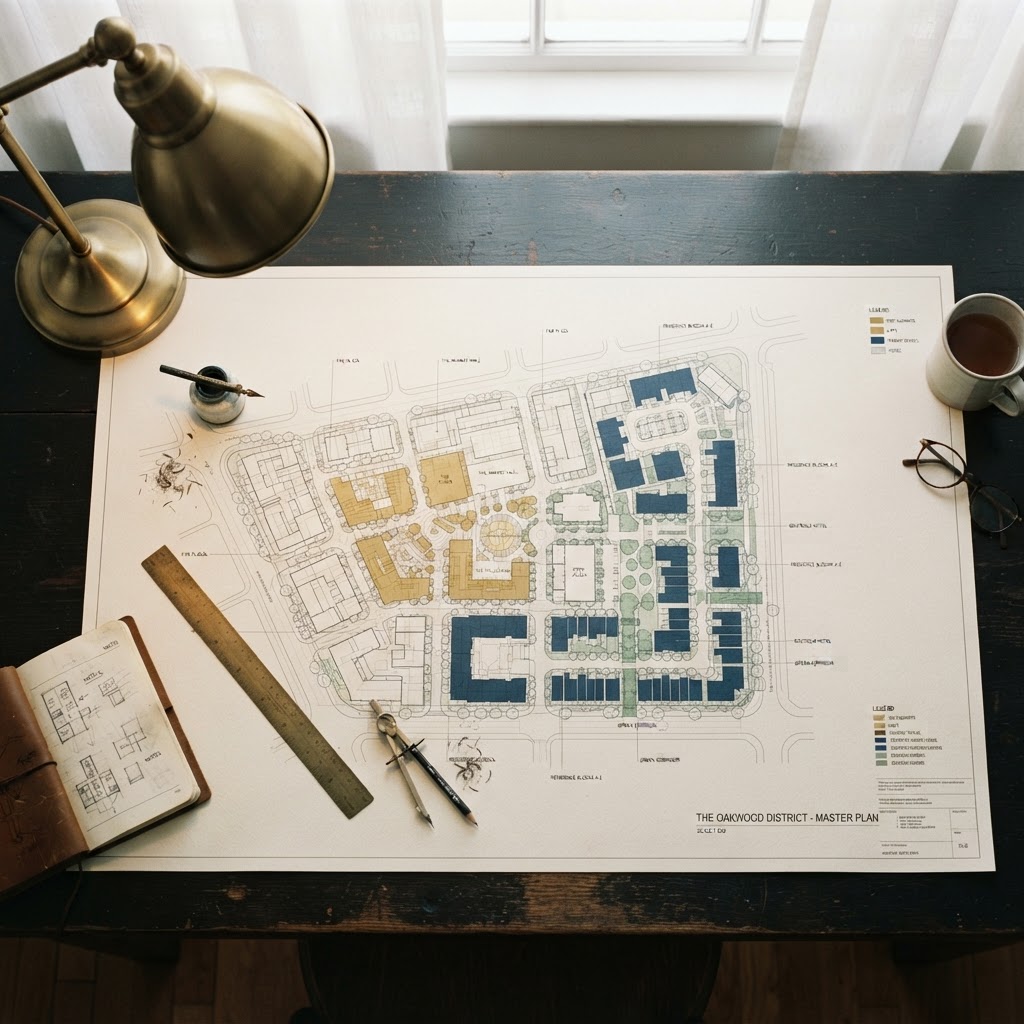
Mixed-use F&b Planning Is Fundamentally Different From Single-restaurant Concept Development. It Requires Thinking At The Portfolio Level — Not "What Is A Great Restaurant Concept?" But "What Combination Of F&b Concepts, Across What Formats And Occasions, Will Make This Development A Destination?"

MIXED-USE F&B PLANNING: STRATEGY FOR DESTINATIONS AND DEVELOPMENTS
Mixed-use F&B planning is fundamentally different from single-restaurant concept development. It requires thinking at the portfolio level — not "what is a great restaurant concept?" but "what combination of F&B concepts, across what formats and occasions, will make this development a destination?"
For developers and master planners, this is the question that determines whether a development becomes a place people seek out or simply a collection of buildings people happen to be in. The F&B offering in a mixed-use development is not a service — it is the social infrastructure that gives the development its identity, its footfall, and its commercial momentum.
This guide covers the core components of mixed-use F&B planning: portfolio strategy, destination logic, tenant curation, daypart coverage, commercial structuring, and the operational frameworks that separate developments that work from developments that look good on a master plan but fail in reality.
1. PORTFOLIO STRATEGY
Mixed-use F&B planning starts with portfolio strategy — how many F&B outlets, what types, what price points, what cuisines, and what occasions. The goal is to create a complementary ecosystem where each concept serves a different need, audience, and daypart, rather than competing with each other.
Key decisions include:
Number of F&B outlets and formats. A mixed-use development might include fine dining, casual dining, quick service, a bar, a café, and possibly a food hall or market concept. The number should be driven by the development's scale, the target audience's diversity, and the daypart coverage needed — not by the desire to fill retail space.
Cuisine diversity and complementarity. Cuisines should be chosen to complement each other, not duplicate. Two Italian restaurants in the same development cannibalise each other. An Italian restaurant, a Japanese restaurant, and a Middle Eastern concept create a diverse portfolio that serves different guest preferences and occasions.
Price point distribution. The portfolio should span a range of price points — from premium dining to accessible casual — to serve different audience segments and occasions. A development with only premium F&B is inaccessible to a large portion of potential visitors. A development with only casual F&B lacks the destination dining that draws special-occasion visitors.
Anchor concepts versus supporting concepts. Anchor concepts are the names that draw people to the development — the destination restaurant, the flagship bar, the market hall. Supporting concepts serve the traffic that anchors generate. A portfolio needs both: anchors to draw, and supporters to serve.
2. DESTINATION LOGIC
The fundamental question of mixed-use F&B planning is: does the F&B portfolio make the development a destination? A destination attracts people who come specifically for the F&B offering. A non-destination only serves people who are already there for other reasons — shopping, work, residence.
Destination creation is not about having famous restaurants. It is about creating a critical mass of F&B concepts that collectively create a reason to visit. One good restaurant is a reason to visit once. A portfolio of complementary concepts that cover multiple occasions is a reason to visit repeatedly.
The destination framework has three levels:
The Primary Draw — the anchor concept or concepts that give the development its F&B identity. These are the concepts that people name when they describe the development. These concepts need to be distinctive enough to justify a dedicated trip.
The Day-to-Day Layer — the cafés, casual restaurants, and bars that serve the regular population of the development — residents, office workers, shoppers. These concepts create the daily footfall that keeps the development alive between peak dining periods.
The Occasion Layer — the concepts that serve specific occasions: weekend brunch, after-work drinks, celebration dinners, business lunches. These concepts fill the gaps between the primary draw and the day-to-day layer.
The Al Jazira Stadium case study demonstrates the power of destination logic at scale. The challenge was not just to add F&B to a football stadium — it was to transform a venue that was active 30 days a year into a 365-day lifestyle destination. The F&B strategy was the vehicle for this transformation, creating a portfolio of concepts that would draw visitors on match days and non-match days alike. The stadium became a destination, not just a venue.
3. TENANT CURATION AND SELECTION
Tenant curation is the process of selecting the right F&B operators for the development. This is not the same as filling space — it is a strategic decision that shapes the development's identity for years.
The curation framework evaluates potential tenants against five criteria:
Brand alignment. Does the tenant's brand reinforce the development's positioning, or does it dilute it? A premium development should not include fast-food chains that signal down-market. A family-oriented development should not include bar concepts that exclude families.
Operational quality. Can the tenant deliver consistent quality? Past performance, operational infrastructure, and management capability should be assessed, not just the concept's appeal.
Audience fit. Does the tenant's target audience match the development's target audience? A brilliant restaurant that serves a different demographic than the development's visitors is not a good fit.
Financial resilience. Can the tenant survive the inevitable ramp-up period? Many F&B concepts fail in their first year because they are undercapitalised. A tenant failure creates a vacant space that damages the development's perception.
Strategic contribution. Does the tenant add something the portfolio needs — a cuisine gap, a daypart gap, an occasion gap? Or does it duplicate an existing offering?
4. DAYPART AND OCCASION COVERAGE
A mixed-use development's F&B portfolio should be active throughout the day. Dead zones — hours when no F&B is open — create dead spaces that make the development feel lifeless.
The daypart framework:
Morning (7:00-11:00). Coffee, breakfast, grab-and-go. This daypart serves residents, office workers, and early shoppers. A café or bakery is essential. Without it, the development starts the day empty.
Lunch (11:00-15:00). Business lunches, casual dining, quick service. This daypart serves the working population and visitors. At least one sit-down restaurant and one quick-service option should be open.
Afternoon (15:00-18:00). Coffee, light bites, social gatherings. This is often the weakest daypart for F&B, but it is critical for keeping the development active between lunch and dinner. A café that transitions from morning to afternoon, or a bar with an afternoon program, can bridge this gap.
Dinner (18:00-22:00). The highest-revenue daypart. The portfolio should offer multiple dinner options across price points and cuisines. This is when destination logic matters most — the dinner offering is what draws people to the development in the evening.
Late night (22:00+). Bars, late-night dining, entertainment. Not every development needs a late-night offering, but for developments targeting a younger demographic or an entertainment positioning, late-night F&B is the differentiator.
The strategic question: map every F&B concept in the portfolio against the dayparts it covers. Identify gaps — dayparts where no concept is open — and fill them. A development with dinner covered but nothing open for breakfast is losing the first four hours of every day.
5. COMMERCIAL STRUCTURING
The commercial relationship between the developer and the F&B operators shapes the financial performance of both parties. The structuring options include:
Percentage rent. The operator pays a base rent plus a percentage of revenue. This aligns the operator's success with the developer's, but requires transparent reporting and audit rights.
Fixed rent. The operator pays a fixed rent regardless of performance. Simple to administer, but misaligns incentives — the developer has no upside when the operator succeeds.
Revenue share without rent. The developer takes a percentage of revenue instead of rent. This is the most aligned model but the riskiest for the developer — if the operator underperforms, the developer's income drops.
Joint venture. The developer and operator co-invest in the F&B concept and share profits. The highest-commitment model, appropriate for anchor concepts where both parties see long-term value.
The key principle: commercial structuring should align incentives. If the developer benefits when the operator succeeds, both parties are motivated to make the F&B portfolio work. If the structuring creates adversarial dynamics — the developer wants higher rent, the operator wants lower costs — the F&B will underperform.
6. THE ROLE OF F&B IN DEVELOPMENT POSITIONING
F&B is not just a revenue stream in a mixed-use development — it is a positioning tool that shapes how the development is perceived by the market.
A development with a curated portfolio of independent, chef-driven concepts signals quality, authenticity, and cultural awareness. A development with a portfolio of chain restaurants signals convenience and accessibility. Neither is inherently right or wrong — but the choice should be deliberate, and it should match the development's overall positioning.
F&B also creates the social atmosphere that defines the development's character. A development with a vibrant bar scene feels different from a development with a family-oriented café culture. A development with a food hall feels different from a development with individual restaurants. These are not just F&B decisions — they are development identity decisions.
7. COMMON PLANNING FAILURES
The Space-First Approach. Allocating F&B space based on the development's layout rather than its strategy. The F&B portfolio should be planned based on market opportunity and audience need, not available space.
The Duplicate Portfolio. Including multiple concepts that serve the same occasion, cuisine, or price point. This cannibalises rather than complements, and it signals a lack of curation.
The Daypart Gap. Failing to cover key dayparts, creating dead zones in the development's daily rhythm. A development that is vibrant at dinner but dead at lunch is operating at half its potential.
The Weak Anchor. Choosing an anchor concept based on availability rather than quality. A weak anchor fails to draw visitors and undermines the entire portfolio.
The Undercapitalised Operator. Selecting tenants who cannot survive the ramp-up period. A vacant F&B space is worse than no F&B space — it signals failure to every visitor.
8. THE PLANNING PROCESS
Effective mixed-use F&B planning follows a structured process:
Market analysis — understand the area's demographics, competitive landscape, and F&B gaps. Audience definition — define who the development is for and what F&B occasions they need. Portfolio design — create a complementary ecosystem of concepts across formats, cuisines, price points, and dayparts. Tenant curation — identify and select operators who fit the portfolio strategy and the development's positioning. Commercial structuring — design lease structures that align incentives between developer and operator. Phasing — plan the F&B rollout to align with the development's occupancy ramp-up. Activation — program events, promotions, and marketing to drive awareness and footfall.
ACTION CHECKLIST
Before finalising any mixed-use F&B plan:
Define the development's F&B positioning — what should it be known for? Design the portfolio as a complementary ecosystem, not a collection of individual restaurants. Map daypart coverage across the portfolio — identify and fill gaps. Select anchor concepts based on drawing power, not just availability. Curate tenants against brand alignment, operational quality, and financial resilience. Structure commercial deals to align incentives between developer and operator. Plan the F&B rollout to match the development's occupancy ramp-up. Build activation into the plan — F&B does not work if no one knows it exists.