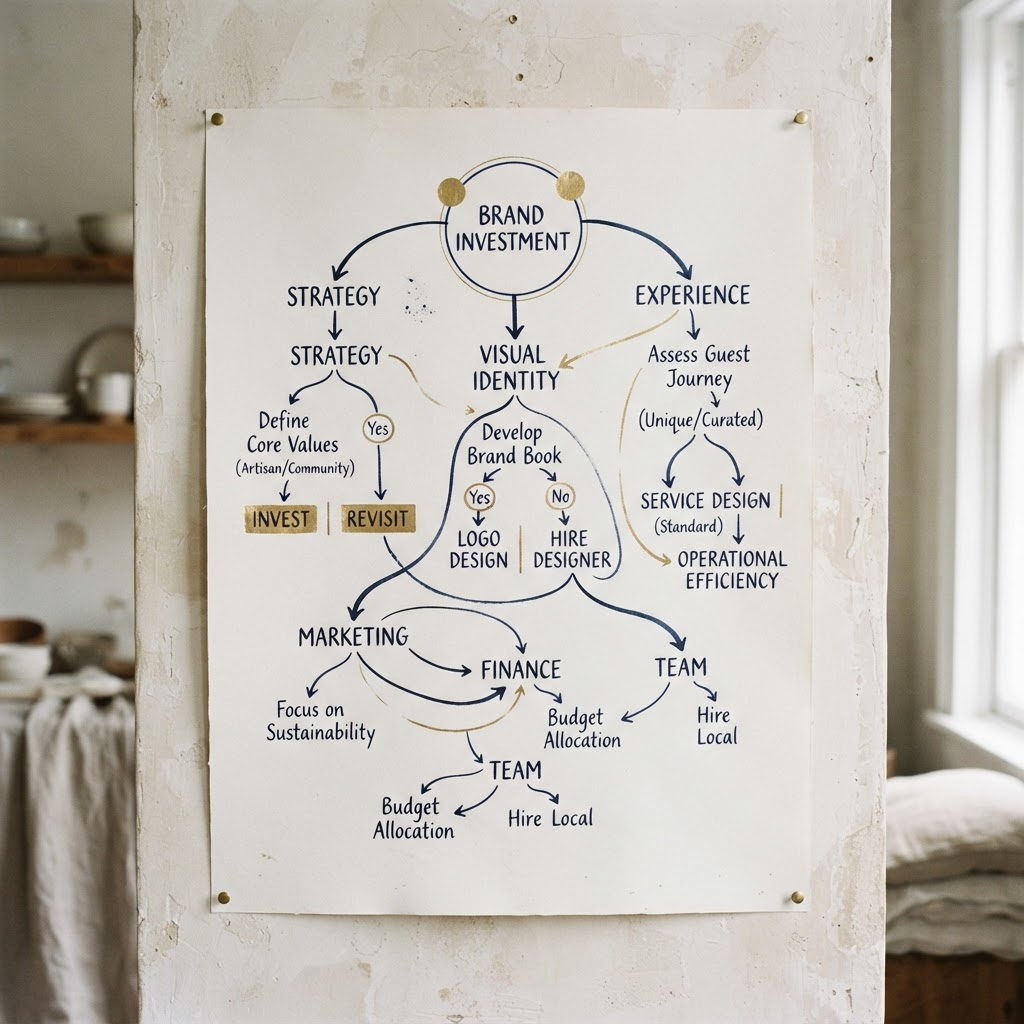
Every Hospitality Concept Needs A Brand. But How Much Should You Invest In Brand Development Before Opening? Is A Logo And A Menu Enough? Do You Need A Full Brand Strategy With Voice, Tone, And Photography Guides? Or Is The Investment Better Spent On Fit-out And Operations?

DECISION GUIDE: HOW MUCH SHOULD WE INVEST IN BRAND DEVELOPMENT?
The Question
Every hospitality concept needs a brand. But how much should you invest in brand development before opening? Is a logo and a menu enough? Do you need a full brand strategy with voice, tone, and photography guides? Or is the investment better spent on fit-out and operations?
This is one of the most common — and most misunderstood — questions in hospitality development. Brand development is often treated as a marketing expense (something to spend money on after opening) rather than a strategic investment (something that shapes every decision before opening). This guide will help you calibrate the investment to your concept's strategic needs.
The Three Levels of Brand Investment
Level 1: Brand Basics (Logo, Name, Basic Identity) What it includes: A name, a logo, a colour palette, a font system, and basic application to signage and menu. What it costs: Relatively low. Can be produced by a freelance designer or small studio. When it's enough: For concepts where the brand is not a primary differentiator — service amenities, functional F&B, quick-service concepts where operational efficiency matters more than brand identity. The risk: The concept looks like every other concept with a basic brand. No distinctive identity. No emotional connection. No reason to choose it beyond convenience.
Level 2: Brand Strategy (Positioning, Pillars, Voice, Identity System) What it includes: A positioning statement, 3-4 brand pillars, a defined voice and tone, guest personas with mindset quotes, a complete visual identity system (logo, colours, typography, imagery direction), and a brand book that guides all creative decisions. What it costs: Moderate to significant. Requires a brand strategist or agency. When it's enough: For concepts where the brand is a meaningful differentiator — destination restaurants, hotel F&B, lifestyle concepts, and any concept where the guest's choice is driven by identity rather than convenience. The risk: Without Level 2 investment, the concept's identity is not defined clearly enough to guide creative decisions. The result is a collection of competent elements that don't add up to a coherent brand.
Level 3: Brand Voice & Language System (Full Architecture) What it includes: Everything in Level 2, plus: a Tone of Voice Guidance document, a Unified Language Deck (FOH prompts and messaging language as separate deliverables), an FOH Language Guide for staff training, a Photography Guide, and Signature Rituals Framework. The brand is a complete, deployable system. What it costs: Significant. Requires a specialist team. When it's enough: For concepts where the brand is the core asset — chef-led fine dining, premium hotel F&B, concepts where the service experience and the brand voice are inseparable, and concepts with multi-outlet or franchise ambitions where consistency must be systematised. The risk: Without Level 3, the brand exists on paper but is not deployed consistently across touchpoints. Staff improvise. Marketing drifts. The brand looks different every time the guest encounters it.
The Decision Framework
Ask four questions:
-
Is the brand a primary reason guests will choose this concept? If yes, invest at Level 2 minimum. If the brand is the core asset (chef-led, premium, multi-outlet), invest at Level 3.
-
Will the concept have a front-of-house team whose interactions with guests are a primary brand touchpoint? If yes, Level 3 is warranted — the FOH Language Guide and Signature Rituals turn the brand into trainable behaviours.
-
Will the concept expand to multiple locations or be franchised? If yes, Level 3 is essential — the brand system must be deployable without the founder's daily presence.
-
What is the cost of brand inconsistency? If inconsistent branding will damage the concept's perceived value (premium concepts), the investment in Level 3 is justified by risk reduction alone.
The Common Mistake
The most common mistake is investing at Level 1 when the concept needs Level 2 or 3. This produces a concept with a logo but no identity — a brand that looks designed but feels hollow. The investment in fit-out and operations is undermined by the absence of a strategic brand foundation. The second mistake is investing at Level 3 when Level 1 is sufficient — over-branding a functional concept wastes money on deliverables that will never be used.
The Next Step
Calibrate the brand investment to the concept's strategic needs. If the brand is a differentiator, invest before opening — not after. If the brand is a core asset, invest in the full system. The brand development budget should be a line item in the pre-opening investment, not a post-opening marketing expense.
If you need help calibrating your brand investment, TCA can help you assess which level of brand development your concept requires.