Food hall strategy is the deliberate design of a multi-vendor food and beverage space as a single, curated experience — not a random collection of stalls, but a strategic
FOOD HALL STRATEGY
Definition
Food hall strategy is the deliberate design of a multi-vendor food and beverage space as a single, curated experience — not a random collection of stalls, but a strategic selection of operators whose combined offering creates a destination greater than the sum of its parts.
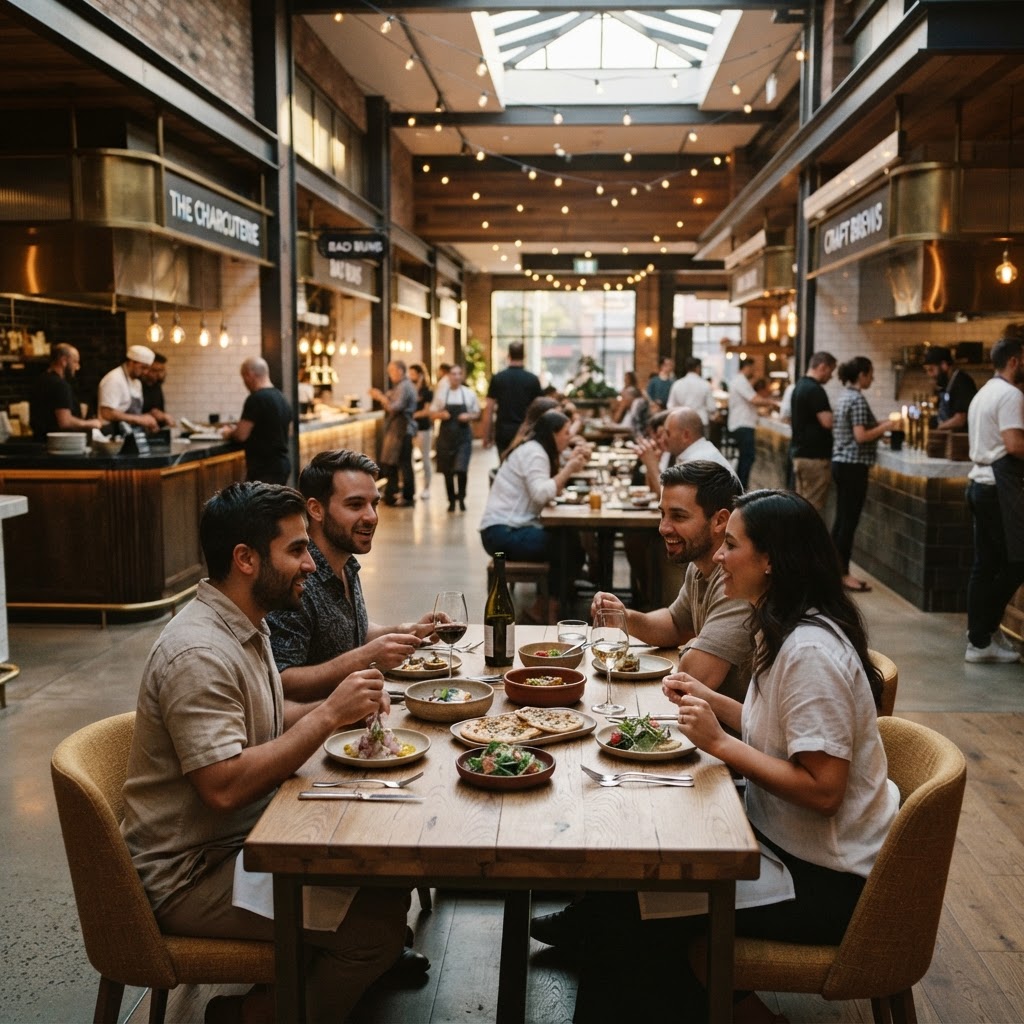
A food hall is not a food court. A food court is functional: fast food options in a shared seating area, typically in a mall, designed for efficiency and throughput. A food hall is experiential: curated vendors, designed spaces, and an atmosphere that makes the food hall itself the destination — not just the individual stalls within it.
Why It Matters
Food halls have become one of the most successful formats in hospitality real estate because they solve a problem that standalone restaurants cannot: they offer variety without commitment. A group of four people can each eat from a different vendor without compromising on destination. A solo visitor can explore multiple cuisines in one visit. A returning guest can try something new each time.
But the success of a food hall depends on curation, not just collection. The wrong mix of vendors produces a space that is busy but undifferentiated — indistinguishable from every other food hall in the city. The right mix produces a destination with its own identity.
How To Think About It
-
Curation strategy: The vendor mix should be intentional — a balance of cuisines, price points, and formats that creates a coherent overall experience. Each vendor should fill a specific role: the anchor (the name that draws traffic), the complement (the cuisine that broadens appeal), the discovery (the unfamiliar option that creates buzz), and the staple (the reliable favourite that drives repeat visits).
-
Spatial design: The layout should guide circulation past all vendors, not create dead zones. Seating should be distributed, not centralised, so that no vendor is disadvantaged by location. The atmosphere should feel like a destination, not a cafeteria.
-
Operator selection: Vendors should be selected for quality and distinctiveness, not just willingness to pay rent. A food hall filled with the same chains available everywhere has no competitive advantage. A food hall with unique, local, or exclusive vendors becomes a destination.
-
Common standards: While each vendor operates independently, the food hall needs common standards for service, cleanliness, and quality. One weak vendor damages the perception of the whole.
Real-World Example
In the F&B Innovation Hub Al Quoz project, the concept was built around a curated mix of vendors in a designed environment — not a food court, but a destination that combined food, design, and cultural programming. The curation strategy ensured that each vendor filled a specific role in the overall experience.
Related Concepts
Mixed-Use Hospitality Real Estate Positioning, Destination F&B, Placemaking Through F&B