
A Competitive Positioning Map Is A Visual Tool That Plots Existing Competitors On Two Axes Relevant To The Market, Revealing Where White Space Exists — The Structurally Empty Positions That No Competitor Currently Occupies.
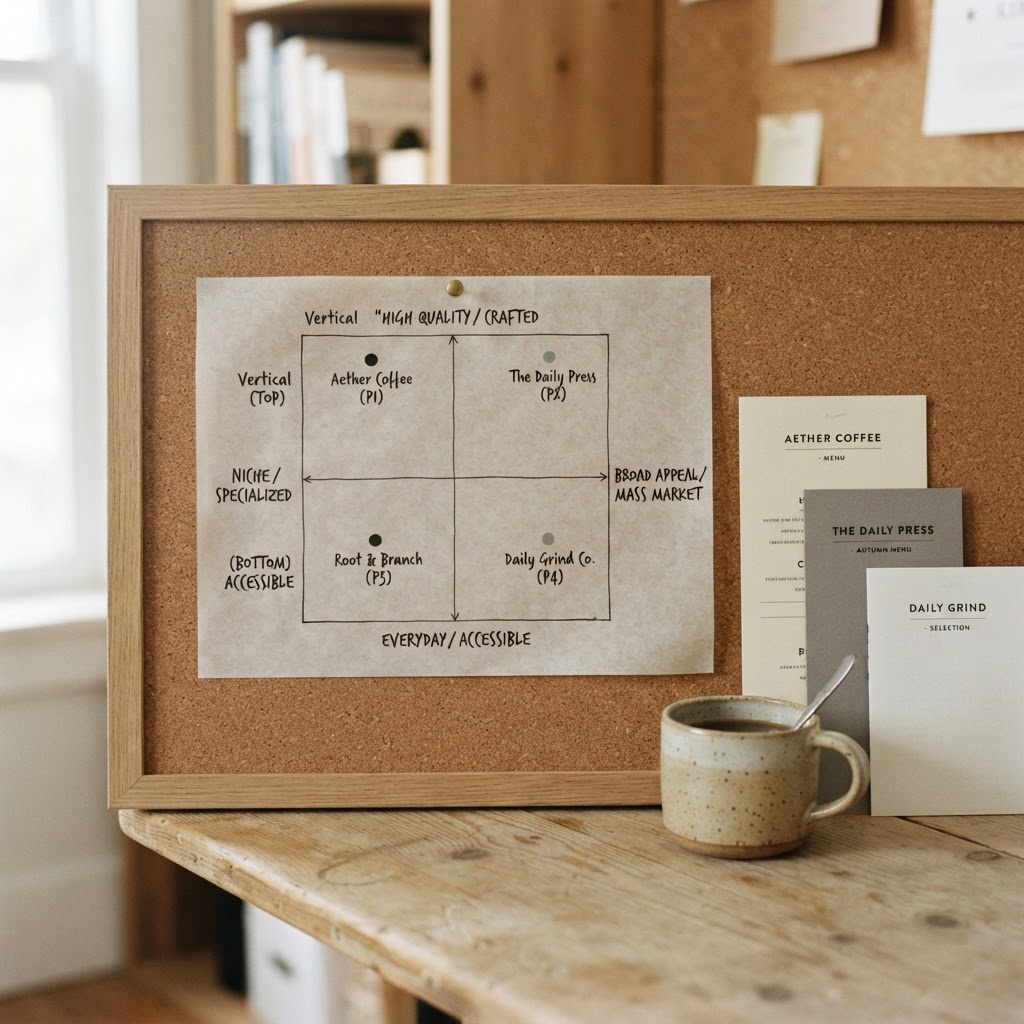
COMPETITIVE POSITIONING MAP
Definition
A competitive positioning map is a visual tool that plots existing competitors on two axes relevant to the market, revealing where white space exists — the structurally empty positions that no competitor currently occupies.
It is the visual proof behind a white-space claim. Saying 'there is a gap in the market' is an assertion. Showing a map where the target position is empty is evidence.
Why It Matters
A positioning map turns subjective opinions about competition into a structured, falsifiable analysis. If someone believes the market is saturated, the map either confirms or refutes that belief. If someone claims there is room for another Italian restaurant, the map shows whether the Italian positions are already filled or genuinely empty.
The map also prevents the most common positioning mistake: choosing a position that is already occupied. Without a map, concepts are often positioned by preference ('we want to be premium') rather than by opportunity ('the premium position is already taken by X, but the premium-casual position is empty').
How To Think About It
-
Choose two axes that matter to the target guest. The axes should reflect dimensions that guests actually use to choose — not dimensions that are convenient for the strategist. Common axis pairs: price vs experience, format vs cuisine, accessibility vs exclusivity, tradition vs innovation.
-
Plot every relevant competitor. Not just direct competitors — include adjacent concepts that serve the same guest need. A coffee bar and a juice bar may compete for the same morning guest even though they serve different products.
-
Look for empty positions. A truly empty position — no competitor anywhere near it — is white space. A position with one weak competitor is a gap. A position with multiple strong competitors is saturated.
-
Test the position. Is it empty because no one has thought of it (opportunity) or because it doesn't work (no demand)? White space must be validated with demand evidence, not just identified on a map.
Real-World Example
In the BLS Market Validation Study, the competitive map used two axes: design/experience choreography (low to high) and single-venue/multi-operator integration (low to high). The target position — high design, multi-operator integration — was structurally empty. No competitor occupied that quadrant. The map made the white-space claim visual and falsifiable.
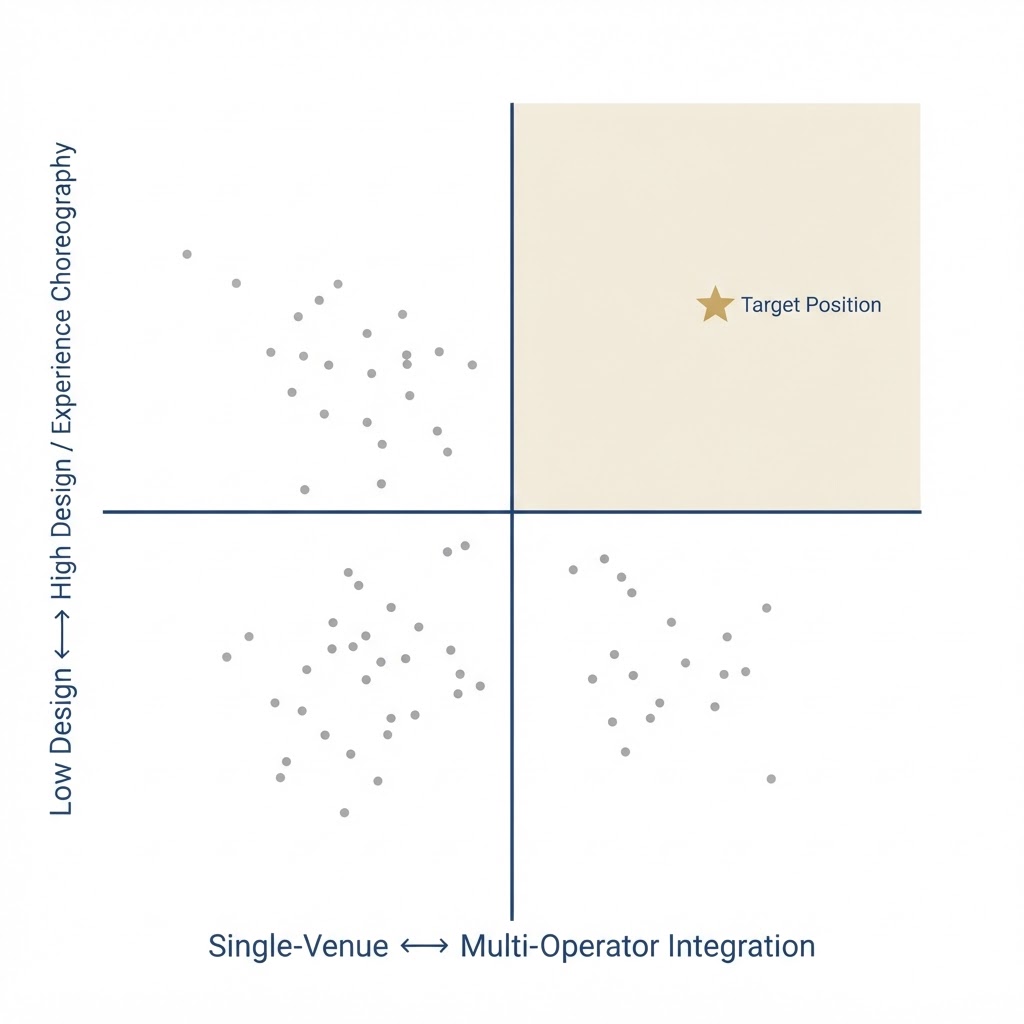 Competitive Positioning Map — the gold target quadrant (high design, multi-operator integration) is structurally empty white space